
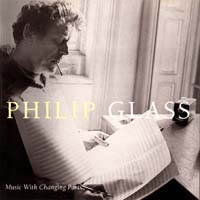
Philip Glass experiments boldly on Music With Changing Parts
Music With Changing Parts- Album Overview
Released in 1970, "Music With Changing Parts" is one of Philip Glass's seminal works, showcasing the composer’s innovative approach to minimalism. This album, released on the Nonesuch label, is a prime example of Glass's exploration of repetitive structures and evolving musical forms. The recording features a unique ensemble of musicians, including members of the Philip Glass Ensemble, which includes keyboardist Michael Riesman and other prominent performers who contribute to the rich tapestry of sound. The album consists of a series of interlocking musical phrases that shift and evolve over time, reflecting Glass’s fascination with the concept of change in music. Notably, the recording sessions took place at the New York City-based Studio 54, a venue not typically associated with classical music but indicative of Glass’s desire to break conventional barriers. "Music With Changing Parts" has been influential in both classical and popular music realms, inspiring a multitude of artists across genres. The album has no traditional singles, but its tracks are often performed in concert settings, further solidifying its status within the minimalist movement. Its cultural significance lies in its challenge to the norms of Western classical music, making it a pivotal work in Glass's oeuvre and the minimalist movement as a whole.
Review
In "Music With Changing Parts," Philip Glass encapsulates the essence of minimalism with a daring and experimental spirit. The album's sound is characterized by its repetitive motifs, layered textures, and intricate rhythms that invite listeners into a meditative state. Glass’s ability to manipulate simple musical ideas into complex, evolving structures is on full display here, demonstrating his mastery of form and his distinctive artistic vision. Unlike traditional compositions that follow a linear progression, this work shifts through various states, creating a sonic landscape that feels both familiar and otherworldly. The lack of lyrics allows the music to speak for itself, emphasizing the emotional undercurrents that resonate throughout the piece. While some may find the repetitive nature of the music challenging, it serves as a powerful tool for introspection and reflection, encouraging listeners to engage deeply with the soundscapes Glass creates. Overall, "Music With Changing Parts" stands as a bold testament to Glass's innovative mindset and his ability to push the boundaries of musical expression.
Highlights
- Innovative use of repetitive structures that create a hypnotic listening experience.
- Complex layering of sounds that evolve throughout the album, showcasing Glass’s compositional skills.
- Culturally significant as a pioneering work in the minimalist genre, influencing countless artists.
Weak points
- The repetitive nature may not appeal to all listeners, particularly those accustomed to traditional song structures.
- Some may find the lack of a clear narrative or thematic development challenging.
- The production quality, reflective of its era, may feel dated to contemporary audiences.
Overall evaluation
"Music With Changing Parts" is a groundbreaking work that encapsulates the essence of minimalism while pushing the boundaries of musical form. Its experimental nature may not resonate with every listener, but its cultural and artistic significance is undeniable.
Personal rating: 8.5/10 2011Mad Rush: Solo Piano Music Of Philip Glass
 1990Passages
 1988Dance Nos. 1-5
 1986Songs From Liquid Days
 1983The Photographer
 1982Glassworks
 1979Einstein on the Beach
 1975Music in Twelve Parts
 0Dance Nos. 1