
How Now: the story Philip Glass wants to tell
How Now- Album Overview
Released in 2022, "How Now" is a notable entry in Philip Glass's extensive discography, showcasing his distinctive minimalist style while embracing new thematic and musical explorations. The album was released under the Orange Mountain Music label, a platform Glass founded to promote his work and that of his contemporaries. "How Now" consists of a series of interconnected pieces that reflect Glass's longstanding interest in the intersection of music, language, and existential inquiry.
The album features collaborations with various artists, including the acclaimed soprano Laura Aikin, who lends her voice to several tracks, enhancing the expressive depth of Glass's compositions. The recording sessions took place in New York City, where Glass has resided for much of his life, and the urban soundscape plays a subtle yet significant role in the album's atmosphere.
Musically, "How Now" delves into the interplay of rhythm and melody, employing Glass's signature repetitive structures while incorporating more complex harmonic textures. The album's tracks, such as "The Last Poet" and "A New Dawn," not only evoke a sense of narrative but also challenge the listener's perception of time and space within the music. The cultural significance of this album lies in its reflection on contemporary issues, inviting listeners to ponder the nature of existence in a rapidly changing world.
Review
In "How Now," Philip Glass continues to push the boundaries of minimalist music while retaining his characteristic style. The album is marked by its fluid transitions and a contemplative quality that invites deep listening. Glass's ability to weave complex emotional narratives through seemingly simple musical motifs is on full display, creating an immersive experience for the audience.
The lyrics, often sparse and poetic, complement the music's expansive landscapes, allowing the listener to engage with the themes of time, identity, and the human condition. Glass's artistic vision remains as relevant as ever, with "How Now" serving as a reflection of both personal and universal experiences. The production is polished yet retains a rawness that feels authentic, highlighting the organic nature of the collaborative process behind the album.
Highlights
- The seamless integration of vocal and instrumental elements.
- Innovative use of rhythm that challenges traditional musical structures.
- Poignant lyrical themes that resonate with contemporary existential questions.
Weak points
- The repetitive nature of some tracks may not appeal to all listeners.
- Occasional lack of dynamic range in certain pieces.
- Some themes may feel abstract and less accessible to a mainstream audience.
Overall evaluation
Philip Glass's "How Now" is a profound exploration of music's ability to convey complex human experiences. While it may challenge some listeners with its minimalist aesthetic, it ultimately offers a rich tapestry of sound and thought that is characteristic of Glass's work.
Personal rating: 8/10 1990Passages
 1988Dance Nos. 1-5
 1986Songs From Liquid Days
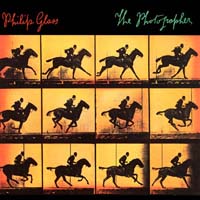 1983The Photographer
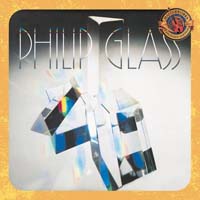 1982Glassworks
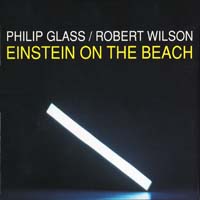 1979Einstein on the Beach
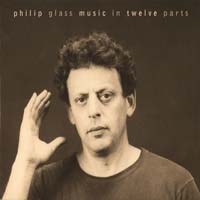 1975Music in Twelve Parts
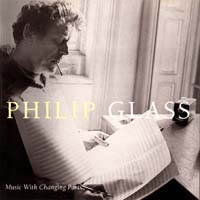 1971Music With Changing Parts
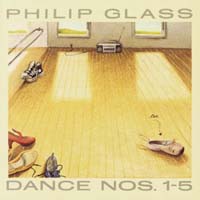 0Dance Nos. 1