
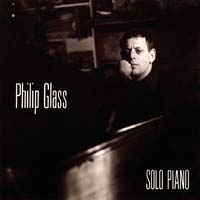
Unpacking Philip Glass's Another Look At Harmony, Part Iv
Another Look At Harmony, Part Iv- Album Overview
Released in 2022, "Another Look At Harmony, Part Iv" is the latest installment in Philip Glass's ambitious exploration of harmony and musical form. The album, released under the prestigious Orange Mountain Music label, builds upon Glass's decades-long career as a pioneer of minimalist music. This release continues the thematic and structural investigation initiated in the previous parts of the series, where Glass delves into the complexities of harmony and its emotional resonance within contemporary classical music.
Glass recorded this album with a mix of his long-time collaborators and a new generation of musicians, ensuring that the sound remains fresh while honoring his minimalist roots. The recording sessions were notably characterized by an organic and collaborative atmosphere, allowing for real-time experimentation and interaction among the artists involved.
The album comprises several tracks that showcase Glass's distinctive repetitive structures, yet they also introduce subtler elements of dissonance and resolution that reflect his growth as a composer. The rich textures and layered instrumentation highlight Glass's ability to evoke profound emotional responses through seemingly simple motifs. The release has been well-received in both classical and contemporary music circles, reaffirming Glass's status as a crucial figure in the evolution of modern music.
As a significant work in Glass's discography, "Another Look At Harmony, Part Iv" not only represents his continued exploration of harmony but also stands as an important contribution to the dialogue surrounding minimalism in the 21st century. With tracks that challenge traditional notions of melody and rhythm, the album invites listeners to engage deeply with its sonic landscapes, making it an essential listen for both long-time fans and new audiences alike.
Review
In "Another Look At Harmony, Part Iv," Philip Glass demonstrates an evolution of his signature sound while remaining true to the core principles of minimalism that have defined his career. The album features repetitive motifs that are both hypnotic and meditative, inviting listeners into a contemplative space. The use of orchestral and electronic elements creates a rich tapestry of sound that is characteristic of Glass's work but also forward-looking in its ambition.
The artistic vision behind this collection is clear: Glass seeks to challenge the listener's perception of harmony and rhythm. While some may argue that the structure can feel cyclical, causing moments of monotony, Glass expertly weaves in variations that keep the journey engaging. The interplay between traditional instrumentation and modern techniques reflects a dynamic approach to composition that resonates with the cultural landscape of contemporary music.
Lyrically, while the album leans heavily on instrumental compositions, the emotional weight of the music speaks volumes. Glass's ability to convey deep feelings without words is a testament to his mastery as a composer. The overall soundscape is both inviting and thought-provoking, encouraging listeners to engage with the music on multiple levels.
Highlights
- Intricate layering of instruments that creates rich textures.
- Continued exploration of harmony that challenges traditional boundaries.
- Emotional depth conveyed without the need for lyrics.
Weak points
- Some tracks may feel repetitive, lacking variation for casual listeners.
- The complexity of the music might be daunting for those unfamiliar with Glass's style.
- Occasional moments of dissonance may not resonate with all audiences.
Overall evaluation
Philip Glass's "Another Look At Harmony, Part Iv" is a profound exploration of harmony that reaffirms his status as a leading figure in contemporary classical music. While it may challenge some listeners with its complexity and repetitive structures, the depth and emotional resonance of the work make it a significant addition to his already illustrious catalog.
Personal rating: 8/10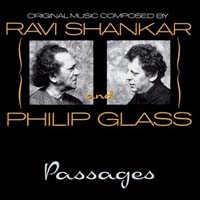 1990Passages
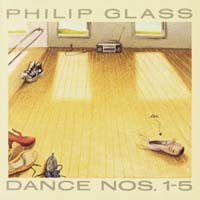 1988Dance Nos. 1-5
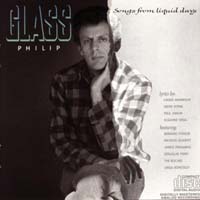 1986Songs From Liquid Days
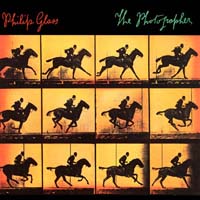 1983The Photographer
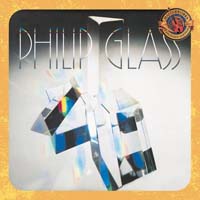 1982Glassworks
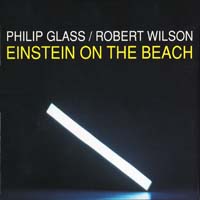 1979Einstein on the Beach
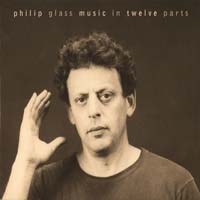 1975Music in Twelve Parts
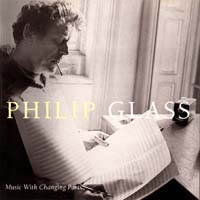 1971Music With Changing Parts
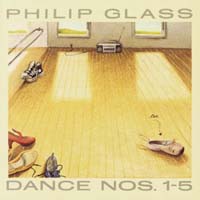 0Dance Nos. 1