
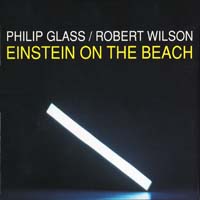
Einstein on the Beach: exploring the world of Philip Glass
Einstein on the Beach- Album Overview
Released in 1976, "Einstein on the Beach" is a groundbreaking opera composed by Philip Glass, known for its avant-garde approach and minimalist style. This seminal work was co-created with theater director Robert Wilson, marking a pivotal moment in the evolution of contemporary opera. The opera is divided into five acts and is performed without an intermission, running for approximately five hours. Its structure eschews traditional narrative, instead employing a series of abstract, non-linear vignettes and repetitive musical motifs that challenge conventional operatic form.
Recorded by the Philip Glass Ensemble, "Einstein on the Beach" was released under the Nonesuch Records label, which has been instrumental in promoting experimental music. The album features a combination of spoken word, singing, and instrumental passages, with the ensemble showcasing a variety of instruments, including synthesizers, woodwinds, and strings. Notably, the opera includes the famous "Knee Play" sections, which serve as transitions between the acts and highlight Glass's innovative use of rhythm and repetition.
The cultural significance of "Einstein on the Beach" cannot be overstated; it played a crucial role in bringing minimalist music into the mainstream and influencing a generation of composers and performers. Its premiere at the Avignon Festival in France was met with both acclaim and controversy, challenging audiences to rethink the boundaries of opera and performance art. The work remains a touchstone in Glass's oeuvre and continues to be performed and reinterpreted worldwide, solidifying its status as a landmark in 20th-century music.
Review
Philip Glass's "Einstein on the Beach" is a mesmerizing auditory experience that defies traditional music and theatrical conventions. The opera's soundscape is characterized by intricate, repetitive structures that create a sense of hypnotic immersion. Glass masterfully employs layers of sound, blending vocal lines with rich instrumental textures that evoke a range of emotions, from tranquility to urgency.
The absence of a conventional narrative may pose challenges for some listeners, yet this aspect is what makes the work so compelling. The lyrics, often abstract and fragmented, invite interpretation and introspection, allowing the audience to engage with the material on a personal level. The collaboration with Robert Wilson adds a visual dimension that complements the music, as the staging and choreography enhance the overall aesthetic and thematic resonance.
In essence, "Einstein on the Beach" represents a bold artistic vision that pushes the boundaries of what opera can be. It is both a sensory challenge and a profound exploration of time, space, and the human condition, making it a significant work that continues to inspire and provoke thought long after its initial performance.
Highlights
- Innovative structure that redefines operatic norms.
- Hypnotic and immersive soundscapes created by Glass's minimalist approach.
- Collaborative brilliance of Glass and Wilson, blending music and visual artistry.
Weak points
- The length may be daunting for some audiences, requiring a significant time commitment.
- Abstract nature of the work may alienate those seeking a traditional narrative.
- Repetitive motifs may feel monotonous to listeners not accustomed to minimalist music.
Overall evaluation
"Einstein on the Beach" is a landmark work that challenges the conventions of opera and contemporary music, offering a unique auditory experience that rewards patience and open-mindedness. Its innovative approach and cultural impact ensure its place in the pantheon of 20th-century art.
Personal rating: 9/10 2011Mad Rush: Solo Piano Music Of Philip Glass
 1990Passages
 1988Dance Nos. 1-5
 1986Songs From Liquid Days
 1983The Photographer
 1982Glassworks
 1975Music in Twelve Parts
 1971Music With Changing Parts
 0Dance Nos. 1