
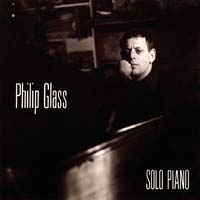
The evolution of Philip Glass in Dance Nos. 1 & 3
Dance Nos. 1 & 3- Album Overview
Released in 1983, "Dance Nos. 1 & 3" is a pivotal album in the discography of American composer Philip Glass, known for his minimalist style that has profoundly influenced contemporary classical music. Originally composed for the acclaimed 1983 production of "Dance," choreographed by Lucinda Childs, these pieces showcase Glass's distinctive approach to rhythm and repetition, creating a unique auditory experience that aligns seamlessly with movement. The album was released under the label CBS Masterworks, now part of Sony Classical. The recordings feature the Philip Glass Ensemble, which includes accomplished musicians such as Michael Riesman, who has collaborated with Glass for decades. The album consists of two primary tracks, "Dance No. 1" and "Dance No. 3," both of which encapsulate the essence of Glass's minimalist aesthetic. The music is characterized by its intricate interplay of melodic lines and harmonic structures, paired with a pulsating rhythmic foundation that serves as a backdrop for Childs's choreography. Notably, the tracks exemplify Glass's ability to create emotional depth through simple musical motifs. The significance of this work extends beyond its immediate musical context; it played a critical role in bringing minimalist music into the mainstream, influencing not only composers but also the realms of dance and theater. As a result, "Dance Nos. 1 & 3" stands as a testament to the evolution of Glass's artistic vision and his contributions to the cultural landscape of the 20th century.
Review
"Dance Nos. 1 & 3" represents a compelling exploration of rhythm and texture that is quintessentially Glass. The album eschews traditional song structures in favor of a more fluid, organic development of sound. Each piece unfolds gradually, layering motifs in a manner that invites deep listening and reflection. Glass's use of repetitive patterns creates an entrancing quality, drawing listeners into a hypnotic state that is both meditative and invigorating. The music, devoid of lyrics, relies heavily on its structural integrity and emotional resonance, showcasing Glass's mastery in creating atmosphere without the need for words. The collaboration with the Philip Glass Ensemble adds a rich dimension to the recordings. The ensemble's tight-knit performance captures the nuances of Glass's intricate compositions, maintaining a sense of urgency and dynamism throughout both pieces. The production quality is pristine, allowing each instrument's voice to shine through the complex tapestry of sound. However, while the album excels in its rhythmic and textural innovation, some listeners may find the minimalist approach less engaging over extended periods, as the repetitive nature of the music can lead to a sense of stasis.
Highlights
- The intricate interplay of rhythmic patterns and melodies.
- The seamless integration of music and dance, emphasizing the physicality of the compositions.
- The high-quality production and performance by the Philip Glass Ensemble.
Weak points
- The minimalist style may not appeal to all listeners, potentially feeling repetitive.
- Lack of lyrical content could limit emotional connection for some.
- Limited range of dynamics throughout the pieces might lead to monotony.
Overall evaluation
"Dance Nos. 1 & 3" is a significant work that encapsulates Philip Glass's innovative spirit and his impact on modern music. While it may not resonate with everyone due to its minimalist nature, it undoubtedly stands as a landmark in the intersection of music and dance.
Personal rating: 8/10 1990Passages
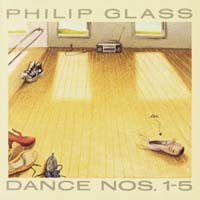 1988Dance Nos. 1-5
 1986Songs From Liquid Days
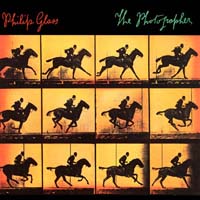 1983The Photographer
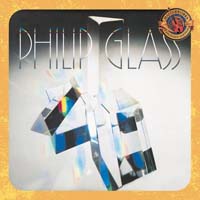 1982Glassworks
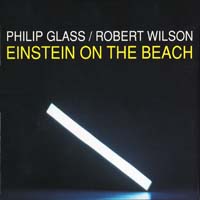 1979Einstein on the Beach
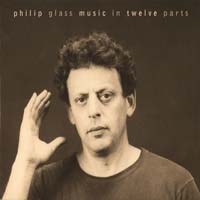 1975Music in Twelve Parts
 1971Music With Changing Parts
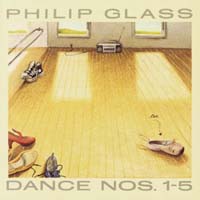 0Dance Nos. 1