

From intro to finale: what The Number Pieces I delivers
The Number Pieces I- Album Overview
Released in 1988, "The Number Pieces I" is a seminal work by the avant-garde composer John Cage, known for his innovative approaches to music and sound. This album, which falls under the genre of contemporary classical music, showcases Cage's exploration of chance operations and indeterminacy, principles he famously integrated into his compositions. Produced by the esteemed label Mode Records, "The Number Pieces I" comprises a collection of works that are characterized by their unique structures and conceptual depth.
The album features performances by a diverse group of musicians, including the renowned ensemble, the Seattle Chamber Players, who bring Cage's intricate scores to life. Each piece on the album is meticulously crafted, utilizing an array of instruments and sounds that challenge traditional notions of melody and harmony. The recording captures Cage's distinctive use of silence and unconventional instrumentation, inviting listeners to engage with the music on a deeper level.
Throughout his career, Cage sought to redefine the boundaries of music, and "The Number Pieces I" is no exception. It is an exploration of sound as a medium, where the listening experience becomes a meditative journey rather than a mere auditory event. The significance of this work extends beyond its immediate musical context, as it reflects Cage's philosophical inquiries into art and existence, solidifying his legacy as a pioneer in the 20th-century avant-garde movement.
Review
The soundscapes of "The Number Pieces I" are both challenging and rewarding, making it a profound listening experience. Cage's use of chance operations, where elements of randomness are incorporated into the composition, adds an unpredictable quality to the music. This unpredictability is both a strength and a challenge, as it requires the listener to engage actively with the unfolding sound. The pieces are layered, often juxtaposing contrasting textures and timbres that evoke a sense of exploration and discovery.
While some may find the lack of traditional structure disorienting, the artistic vision behind the album is clear: it is an invitation to embrace the unexpected and to find beauty in the ephemeral. Cage's innovative approach to music encourages an appreciation for silence and the spaces between notes, prompting listeners to reconsider their preconceptions about what music can be. Overall, "The Number Pieces I" stands as a testament to Cage's genius, pushing the boundaries of composition and performance.
Highlights
- Innovative use of chance operations enhances the listening experience.
- Unique instrumentation challenges conventional musical forms.
- Philosophical depth encourages a meditative engagement with sound.
Weak points
- May be difficult for mainstream audiences to appreciate fully.
- Some pieces may feel overly abstract or inaccessible.
- Length of tracks could test the patience of casual listeners.
Overall evaluation
"The Number Pieces I" is a compelling exploration of sound, silence, and the philosophical underpinnings of music. It represents John Cage's enduring impact on contemporary music and challenges listeners to expand their understanding of what music can embody.
Personal rating: 8/10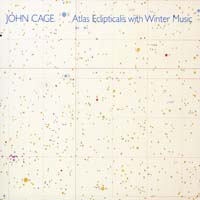 1993Winter Music
 1992Litany for the Whale
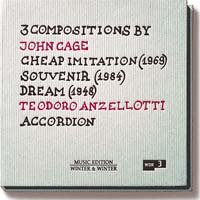 1977Cheap Imitation