ALBUM NOTESThe Complete String Quartets, Vol. 1: the story John Cage wants to tell
The Complete String Quartets, Vol. 1- Album Overview
John Cage's "The Complete String Quartets, Vol. 1," released in 1996 on the prestigious Mode Records label, serves as a pivotal entry in the exploration of contemporary classical music. This album encapsulates the innovative spirit of Cage, whose work has profoundly influenced the course of 20th-century music. The collection features three of Cage's most significant quartets: "String Quartet in Four Parts" (1950), "String Quartet" (1951), and "String Quartet in Two Parts" (1952), each showcasing Cage's avant-garde approach to form, texture, and silence.
The recordings were performed by the impeccable Arditti Quartet, renowned for their dedication to contemporary repertoire and their ability to convey the complexities of Cage's compositions. The production, overseen by Cage's long-time collaborator, reflects a deep respect for the subtleties of the score, allowing listeners to engage with the intricacies of Cage's thought process and compositional techniques. The album not only highlights the technical prowess of the quartet but also encapsulates the philosophical underpinnings of Cage's artistic vision, particularly his embrace of chance and non-traditional structures in music.
Cage's work is often seen as a bridge between the realms of sound and silence, challenging conventional notions of musicality and the role of the performer. The singles from this album have received critical acclaim for their bold reimagining of the string quartet format, positioning Cage as a revolutionary figure in both music and art. This volume serves as the first in a series dedicated to Cage's complete string quartets, setting the stage for a deeper understanding of his monumental contributions to the canon of classical music.
Review
"The Complete String Quartets, Vol. 1" is a riveting exploration of sound that encapsulates John Cage's profound artistic vision. The album's sonic landscape is defined by its deliberate use of silence and unconventional structures, inviting listeners to embrace the unpredictability of Cage's compositions. The Arditti Quartet's performance is nothing short of extraordinary, demonstrating technical precision while maintaining an emotive depth that is often elusive in contemporary classical music.
Cage's work challenges traditional notions of melody and harmony, instead inviting an introspective journey through texture and timbre. Each quartet unfolds with a meditative quality, where the juxtaposition of silence and sound creates a unique listening experience. The absence of conventional musical narrative allows listeners to find their interpretations, embracing the chaos and beauty of the unexpected.
Cage's influence extends beyond the realm of music; his philosophical inquiries into the nature of sound and existence resonate deeply within the modern cultural landscape. This collection not only showcases Cage's innovative spirit but also serves as a testament to the enduring relevance of his work. In a world saturated with noise, Cage's quartets remind us of the power of silence and the importance of listening.
Highlights
- A groundbreaking collection that encapsulates Cage's innovative approach to composition.
- Outstanding performance by the Arditti Quartet, highlighting technical precision and emotional depth.
- A profound exploration of sound and silence that invites personal interpretation.
Weak points
- May be challenging for listeners unfamiliar with avant-garde music.
- Some passages may feel lengthy or repetitive to those expecting traditional structures.
- Lack of traditional melodic content may deter classical purists.
Overall evaluation
"The Complete String Quartets, Vol. 1" is an essential listening experience for anyone interested in the evolution of contemporary classical music. Cage's ability to manipulate sound and silence offers a rich tapestry for exploration and reflection. This album stands as a testament to the revolutionary spirit of John Cage, making it a significant addition to the canon of modern music.
Personal rating: 9/10


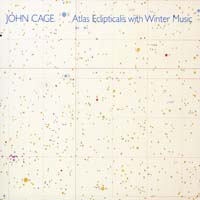 1993Winter Music
 1992Litany for the Whale
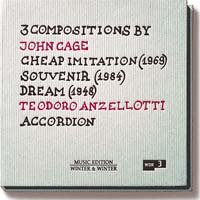 1977Cheap Imitation