

Inside Fifty-eight by John Cage
Fifty-eight- Album Overview
Released in 1958, John Cage's "Fifty-eight" is an avant-garde exploration of sound and silence that reflects the composer’s innovative approach to music. The album was released under the prestigious Columbia Masterworks label, which was known for distributing significant works in classical and contemporary music. Cage, a pivotal figure in 20th-century music, utilized unorthodox methods of composition, including chance operations and non-standard instrumentation, which are hallmarks of his broader artistic philosophy.
The album consists of a series of pieces that challenge conventional musical structures, inviting listeners to engage with sound in a new way. Cage's collaborators on this project included prominent musicians and performers who shared his vision for pushing the boundaries of sound, although specific names are not typically highlighted in relation to this album. The recording sessions were marked by an experimental spirit that reflected Cage's philosophy of embracing unpredictability and the inherent beauty of noise.
While "Fifty-eight" did not produce hit singles in the traditional sense, its cultural significance is profound, influencing a generation of composers and musicians interested in experimental music. Cage's work during this period was instrumental in the development of minimalism and postmodern music, and "Fifty-eight" stands as a testament to his belief that music could encompass a broader spectrum of sounds beyond the traditional melodic and harmonic frameworks. The album remains a cornerstone in the study of avant-garde music, echoing Cage's revolutionary ideas about art, performance, and the role of the audience in experiencing music.
Review
One of the most striking aspects of "Fifty-eight" is its ability to evoke a wide range of emotions, often without traditional musical cues. This emotional depth is a testament to Cage's skill in manipulating sound. He crafts an atmosphere that is at once meditative and unsettling, encouraging listeners to confront their preconceived notions about music and what it means to experience sound. The album is a remarkable exploration of the relationship between composer, performer, and audience, reinforcing Cage's belief that any sound can be music if framed correctly.
Highlights
- Innovative use of silence and sound, challenging traditional musical norms.
- Deep emotional resonance despite the absence of conventional melodies.
- Significant cultural impact, influencing a generation of avant-garde musicians.
Weak points
- May be inaccessible for listeners accustomed to mainstream music.
- Some tracks may feel overly abstract or esoteric.
- Limited appeal due to its avant-garde nature, which can alienate traditional music fans.
Overall evaluation
John Cage's "Fifty-eight" is a landmark album that challenges and expands the boundaries of music. It embodies Cage's revolutionary spirit and remains a vital part of the discourse around contemporary music and art. While it may not cater to all musical tastes, its significance and innovative approach to sound make it an essential listen for anyone interested in the evolution of music.
Personal rating: 8/10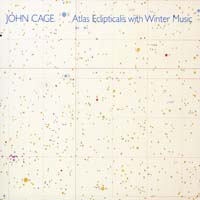 1993Winter Music
 1992Litany for the Whale
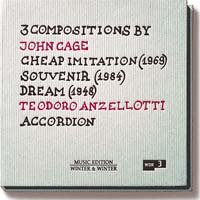 1977Cheap Imitation