
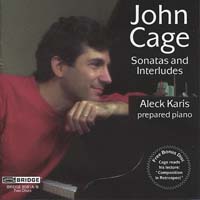
In A Landscape: the next chapter for John Cage
In A Landscape- Album Overview
"In A Landscape," released in 1948, is a seminal work by the avant-garde composer John Cage. This piece is part of a broader exploration of sound and silence that Cage famously championed throughout his career. The work stands out for its tranquil and meditative qualities, embodying Cage's interest in the natural world and the concept of indeterminacy in music. Originally composed for piano, it was later arranged for other instruments, including the harp and various electronic formats, showcasing its adaptability and enduring relevance.
The album was released under the label Mode Records and has been revisited in various recordings, reflecting Cage's lasting influence on contemporary music. Collaborators on the album include notable musicians who have interpreted Cage's works over the decades, ensuring that his innovative ideas continue to resonate. The piece is known for its delicate interplay of notes and the seamless integration of silence, encouraging listeners to engage deeply with the sounds around them.
Upon its release, "In A Landscape" contributed to the burgeoning minimalist movement and has since been celebrated as a significant work that challenges conventional notions of melody and rhythm. Its cultural significance is profound, as it invites audiences to reconsider the role of the listener and the environment in the experience of music. Over time, Cage's work has inspired countless musicians and composers, making "In A Landscape" a pivotal chapter in the narrative of 20th-century music.
Review
In "In A Landscape," John Cage crafts an auditory experience that feels both timeless and innovative. The composition's serene, flowing lines evoke a deep sense of calm, transporting listeners to a tranquil space that emphasizes the beauty of simplicity. Cage's unique approach to sound, characterized by his use of prepared piano techniques and unconventional structures, allows for a rich tapestry of tonal colors that resonate with the listener on multiple levels.
While the work is largely instrumental, its emotive power lies in the way Cage manipulates silence and sound to create an immersive atmosphere. The absence of traditional melody challenges listeners to engage with the subtleties of each note, fostering a deeper appreciation for the nuances of sound. This artistic vision aligns with Cage's philosophy that music is not merely a form of entertainment but a means of exploring existence itself.
Cage's "In A Landscape" is a profound statement on the relationship between music, nature, and the human experience, encouraging a contemplative approach to listening that remains relevant today.
Highlights
- Innovative use of silence and sound creates a meditative listening experience.
- The adaptability of the piece across various instruments showcases Cage's compositional genius.
- Significant cultural impact, influencing generations of musicians and composers.
Weak points
- May be perceived as too abstract or challenging for mainstream audiences.
- Lengthy, contemplative sections could lose the attention of casual listeners.
- Lack of traditional structure may not appeal to fans of more conventional music genres.
Overall evaluation
"In A Landscape" is a masterful exploration of sound and silence that showcases John Cage's innovative spirit. Its cultural significance and impact on the minimalist movement cannot be overstated, making it a vital listen for anyone interested in the evolution of contemporary music.
Personal rating: 8/10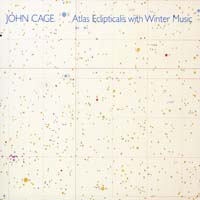 1993Winter Music
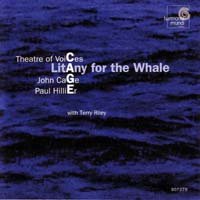 1992Litany for the Whale
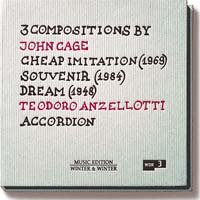 1977Cheap Imitation