

Inside John Cage by John Cage
John Cage- Album Overview
The album "John Cage," released in 1969 by the influential American composer and avant-garde artist John Cage, serves as a fascinating exploration of sound and silence. While Cage is best known for his groundbreaking work in experimental music, this particular album encapsulates his philosophy of chance music and the use of unconventional instruments. The album was released under the prestigious label of CMP (Cage Music Productions), which aimed to promote avant-garde compositions. Cage's work often involved collaborations with other artists and musicians, and on this album, he is accompanied by notable figures such as David Tudor, who was a pioneering figure in electronic music and had a significant role in Cage's performances. This album doesn't feature traditional song structures or lyrics; instead, it immerses listeners in a soundscape that challenges their perceptions of music itself. The recordings include a variety of sounds generated by everyday objects and instruments, reflecting Cage's belief that anything could be music if approached with the right mindset. The tracks range from the serene to the chaotic, inviting listeners into a contemplative space that mirrors Cage's own philosophical inquiries. The cultural significance of "John Cage" cannot be understated, as it continues to influence contemporary musicians and composers who seek to push the boundaries of what music can be, making it an essential listen for anyone interested in the evolution of modern music.
Review
John Cage's "John Cage" is an audacious venture into the realm of sound, embodying his revolutionary approach to music. The absence of conventional melodies or lyrics may initially alienate some listeners; however, those willing to embrace the album's unique structure will find a rich tapestry of auditory experiences. Cage's artistic vision is clear throughout the album — it challenges listeners to reconsider their understanding of music and sound. The use of silence, a hallmark of Cage's work, manipulates the listener's sense of time and expectation, creating a profound and often unsettling atmosphere. The production quality is impressive given the era, with Cage and his collaborators meticulously crafting each sound. The juxtaposition of different sonic elements leads to a sense of unpredictability, reminiscent of life's inherent chaos. This unpredictability is both exhilarating and thought-provoking, making the album a cornerstone of avant-garde music. Ultimately, Cage's willingness to explore the unknown resonates deeply, inviting listeners on an introspective journey that transcends traditional musical boundaries.
Highlights
- Innovative use of silence and unconventional sounds.
- Collaborative efforts with renowned artists like David Tudor.
- Profound cultural and philosophical implications that challenge traditional music norms.
Weak points
- May be inaccessible for mainstream audiences accustomed to traditional music.
- Some tracks might feel overly abstract or disjointed.
- Limited appeal due to its niche within the avant-garde genre.
Overall evaluation
Cage's "John Cage" is an essential exploration of sound that redefines the boundaries of music. While it may not cater to everyone's tastes, its artistic integrity and philosophical depth make it a groundbreaking work that continues to inspire. The album is a testament to Cage's genius and his lasting impact on the world of contemporary music.
Personal rating: 8/10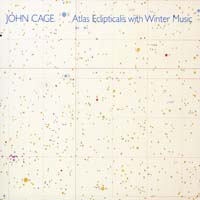 1993Winter Music
 1992Litany for the Whale
 1977Cheap Imitation