
Review of John Cage – Cage: Concerto For Prepared Piano & Orchestra
Cage: Concerto For Prepared Piano & Orchestra - Album Overview
"Cage: Concerto For Prepared Piano & Orchestra" is a seminal work by avant-garde composer John Cage, released in 1949. The album showcases Cage's pioneering use of the prepared piano, an instrument altered with objects placed on or between its strings to create unique sounds. This revolutionary approach not only broadened the sonic landscape of classical music but also paved the way for experimental music in the 20th century. The concerto was recorded by the New York Philharmonic, conducted by Leonard Bernstein, and features pianist David Tudor, a close collaborator of Cage.
The work consists of three movements, each exploring the juxtaposition of silence and sound, a concept that Cage famously advocated through his philosophy of indeterminacy. The recording captures the essence of Cage's intent, allowing the listener to experience the delicate interplay between the orchestra and the prepared piano. Released under the Columbia Masterworks label, this album stands as a testament to Cage's innovative spirit and his ability to challenge traditional musical forms.
Cage's "Concerto For Prepared Piano & Orchestra" was part of a broader movement in the mid-20th century that sought to redefine the boundaries of music and art. It has influenced countless composers and musicians across genres, from contemporary classical to experimental rock. The album remains a vital reference point for discussions about the role of chance and preparation in music creation, embodying the spirit of exploration that characterized Cage's career.
Review
The "Concerto For Prepared Piano & Orchestra" is a transformative listening experience that challenges conventional expectations of music. Cage's innovative use of the prepared piano creates a rich tapestry of sounds that oscillate between percussive clinks and melodic whispers, inviting listeners to engage with the music on a deeper level. The orchestration, marked by its strategic use of silence and dynamic contrasts, complements the piano's idiosyncratic tones, resulting in a unique dialogue between the soloist and the orchestra. Cage's artistic vision is clear; he encourages the audience to embrace unpredictability and to find beauty in the unexpected.
The album's experimental nature may not appeal to everyone, as its abstract qualities can be challenging for listeners accustomed to traditional forms of composition. However, for those willing to immerse themselves in Cage's world, the rewards are abundant. The work exemplifies Cage's belief that music is not merely about notes but about the experience of sound itself, making it a milestone in the evolution of contemporary music.
Highlights
- Innovative use of prepared piano, creating a unique soundscape.
- Cage's philosophy of indeterminacy and silence resonates throughout the work.
- Outstanding collaboration with Leonard Bernstein and the New York Philharmonic enhances the orchestral texture.
Weak points
- Abstract nature may alienate traditional classical music fans.
- The unconventional structure can be disorienting for casual listeners.
- Some may find the heavy reliance on silence and unconventional sounds challenging to appreciate.
Overall evaluation
John Cage's "Cage: Concerto For Prepared Piano & Orchestra" is a landmark work that embodies the spirit of innovation and experimentation in music. It invites listeners to explore sound in new and profound ways, making it a crucial piece for anyone interested in the evolution of contemporary music.
Personal rating: 9/10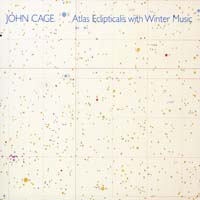 1993Winter Music
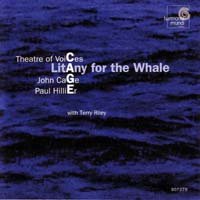 1992Litany for the Whale
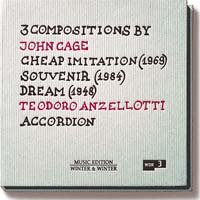 1977Cheap Imitation