

Album spotlight: John Cage – Atlas Eclipticalis
Atlas Eclipticalis- Album Overview
Released in 1961, John Cage's "Atlas Eclipticalis" is a groundbreaking avant-garde composition that has left a lasting impact on contemporary classical music. The album was released under the prestigious label, Mode Records, which has been instrumental in promoting innovative works in the realm of modern music. The composition is unique in its approach, as it was not initially intended for traditional performance; instead, it was created using a graphic score that reflects Cage's fascination with chance operations and the cosmos.
Cage composed "Atlas Eclipticalis" by overlaying the stars of the ecliptic plane onto a musical staff, effectively translating celestial movements into sound. This method exemplifies Cage's innovative spirit and his belief in the randomness of existence. The work is scored for various instruments, including strings and winds, and is often performed by ensembles. It showcases Cage's collaboration with prominent musicians and artists of his time, pushing the boundaries of how music is perceived and experienced. The album also features the influence of Cage's earlier works, such as "Music of Changes," where indeterminacy plays a crucial role.
While "Atlas Eclipticalis" may not have produced any commercial singles, its significance lies in its experimental nature and its challenge to conventional musical forms. The piece has been performed and recorded by various artists, further solidifying its place in the canon of modern music. Cage's work in this album reflects the broader cultural shifts of the 1960s, where art began to embrace abstraction and non-traditional methods, paving the way for future generations of musicians and composers.
Review
Listening to "Atlas Eclipticalis" is like embarking on an auditory journey through the cosmos. The composition challenges traditional notions of melody and harmony, inviting listeners to engage with sound on a deeper level. Cage's use of indeterminacy allows for a unique listening experience; no two performances are ever the same. The intricate interplay of instruments creates a tapestry of sound that often feels both chaotic and serene.
The lack of conventional structure may deter some listeners, but for those open to exploration, the album offers profound insights into the nature of music and its relationship to the universe. Cage's artistic vision transcends mere auditory pleasure, encouraging introspection and a reevaluation of how we define music. The work serves as a testament to Cage's genius, showcasing his ability to blend philosophy with sound, ultimately inviting us to embrace the unpredictable nature of life itself.
Highlights
- Innovative use of graphic score and chance operations
- Unique blend of sounds that challenge traditional musical forms
- Profound philosophical underpinnings that encourage introspection
Weak points
- May be inaccessible to listeners unfamiliar with avant-garde music
- Lack of conventional melodies may leave some feeling unsatisfied
- Performances can vary greatly, affecting the consistency of the listening experience
Overall evaluation
"Atlas Eclipticalis" stands as a monumental work in the realm of avant-garde music, pushing the boundaries of creativity and sound. While it may not cater to traditional tastes, its innovative spirit and philosophical depth make it a significant piece worth exploring.
Personal rating: 8/10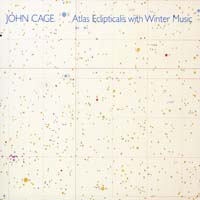 1993Winter Music
 1992Litany for the Whale
 1977Cheap Imitation