

John Cage experiments boldly on Freeman Etudes
Freeman Etudes- Album Overview
The "Freeman Etudes" is a remarkable work by avant-garde composer John Cage, first released in 1990 through the prestigious label Mode Records. This collection consists of a series of etudes for solo violin, composed between 1977 and 1990, and is one of Cage's last major works before his passing in 1992. The etudes are marked by Cage's innovative use of silence, chance operations, and non-traditional techniques, creating a unique sonic landscape that challenges the conventional boundaries of classical music.
The album emphasizes Cage's exploration of timbre, rhythm, and the concept of indeterminacy, which are central themes throughout his oeuvre. The recording features accomplished violinist Irvine Arditti, whose virtuosic skills breathe life into Cage's complex scores. The etudes were written with a focus on the individual performer's interpretation, allowing for a wide range of expression and spontaneity. The pieces are devoid of traditional melodic structures, inviting listeners to engage with sound in a new way.
Significantly, "Freeman Etudes" embodies Cage's philosophical ideas about music and existence, blurring the lines between performer and audience, as well as sound and silence. Each etude serves as a meditation on the nature of sound, and the album as a whole has been influential in the realms of contemporary classical music and experimental performance. It stands as a testament to Cage's legacy, encouraging future generations to explore the limitless possibilities of musical expression.
Review
The "Freeman Etudes" presents an audacious exploration of sound that is quintessentially Cage. The album's structure, or lack thereof, is deliberately non-linear, reflecting Cage's belief in the beauty of unpredictability. Arditti's performance is captivating, navigating the intricacies of each etude with a deftness that showcases both technical prowess and emotional depth. The use of extended techniques, such as harmonics and col legno, creates a rich tapestry of textures that challenge traditional notions of violin playing.
While the absence of conventional melody may be daunting for some listeners, the experience is ultimately rewarding for those willing to embrace Cage's philosophy. The etudes invite contemplation, each one unfolding like a story that evolves in real time, often leaving the listener in a state of heightened awareness. Cage's ability to weave silence into the music forces the audience to reconsider their relationship with sound, making every pause as significant as the notes themselves.
Highlights
- Innovative use of silence and sound, creating a unique auditory experience.
- Virtuosic performance by Irvine Arditti, showcasing technical brilliance.
- Significant contribution to the understanding of contemporary classical music and indeterminacy.
Weak points
- May be challenging for listeners unaccustomed to avant-garde music.
- The non-linear structure may lead to a feeling of disorientation.
- Limited appeal to traditional classical music audiences seeking melody-driven compositions.
Overall evaluation
"Freeman Etudes" is a bold statement in the realm of contemporary music, exemplifying John Cage's innovative spirit and his ability to redefine the boundaries of sound. While it may not resonate with everyone, it is a profound exploration that rewards those willing to engage with its complexities.
Personal rating: 9/10 1993Winter Music
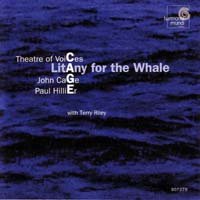 1992Litany for the Whale
 1977Cheap Imitation