

Review of John Cage – Complete Piano Music, Volume 1: The Prepared Piano
Complete Piano Music, Volume 1: The Prepared Piano- Album Overview
Released in 1988 by the label Mode Records, "Complete Piano Music, Volume 1: The Prepared Piano" showcases the innovative works of American composer John Cage, who is renowned for his avant-garde approach to music and the use of unconventional methods. This album features the groundbreaking practice of prepared piano, a technique Cage pioneered in the 1940s, involving the insertion of various objects between the strings of a piano to create unique timbres and sounds. The collection includes several key compositions, such as "Sonatas and Interludes," which exemplifies Cage's fascination with chance music and the exploration of silence.
The recordings in this volume were performed by the accomplished pianist David Tudor, who was a frequent collaborator with Cage and instrumental in bringing his compositions to life. The album serves as an essential document of Cage's work, capturing the intricate textures and innovative soundscapes that he created through the prepared piano. The release not only presents Cage's compositions but also reflects the broader cultural movements of the 20th century, emphasizing the importance of experimentation in the arts during this period. The album is a vital resource for understanding the evolution of contemporary classical music and Cage's lasting influence on generations of musicians and composers.
Review
The sound of "Complete Piano Music, Volume 1: The Prepared Piano" is a profound exploration of texture and silence, hallmarks of Cage's compositional ethos. Each piece is meticulously crafted, revealing the complexities of sound that emerge from the prepared piano. The interplay of dissonance and harmony challenges traditional notions of music, inviting listeners to engage with the work on a deeper level. Tudor's performance is both precise and expressive, conveying the emotional depth inherent in Cage's compositions. The lack of conventional melodic structures might deter some listeners, but for those willing to embrace the avant-garde, this album opens up a world of auditory experimentation.
In terms of artistic vision, Cage pushes the boundaries of what music can be, emphasizing the importance of chance and spontaneity in the creative process. His use of silence—often regarded as the absence of sound—is transformed into an integral component of the listening experience, encouraging audiences to reconsider their perceptions of music and sound. Overall, the album stands as a testament to Cage's pioneering spirit and his role as a catalyst for change in the world of contemporary music.
Highlights
- Innovative use of the prepared piano creates unique soundscapes.
- David Tudor's exceptional performance brings Cage's vision to life.
- The album is a significant contribution to the understanding of 20th-century avant-garde music.
Weak points
- May be challenging for traditional music lovers due to its unconventional structure.
- Some pieces may seem repetitive or sparse, testing listener patience.
- The reliance on prepared techniques might not appeal to all audiences.
Overall evaluation
"Complete Piano Music, Volume 1: The Prepared Piano" is a landmark recording that encapsulates John Cage's revolutionary approach to music. It is a compelling listen for those open to exploring the boundaries of sound and silence.
Personal rating: 9/10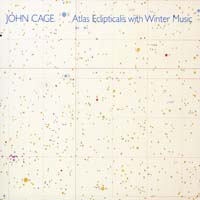 1993Winter Music
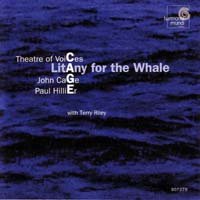 1992Litany for the Whale
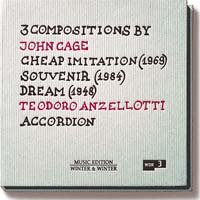 1977Cheap Imitation