ALBUM NOTESA closer look at John Cage-Sixty-Two Mesostics Re Merce Cunningham (Eberhard Blum)'s album Sixty-Two Mesostics Re Merce Cunningham (Eberhard
Album overview
The album "Sixty-Two Mesostics Re Merce Cunningham" by John Cage, featuring Eberhard Blum, was released in 1991. This unique work is a reflection of Cage's ongoing exploration of the intersection between music, language, and visual art. The album is notably a tribute to the famed American choreographer Merce Cunningham, a long-time collaborator of Cage. The production combines avant-garde elements with a soundscape that is both cerebral and abstract. The album is released under the label Mode Records, known for its dedication to contemporary classical music.
Cage's "Mesostics" are a form of poetry that utilizes a vertical arrangement of letters to create a unique interplay of meaning, a concept he innovatively adapted into musical form. Collaborator Eberhard Blum, an accomplished flutist, plays a significant role in bringing Cage's vision to life, utilizing extended techniques that challenge traditional flute playing. The album's significance lies in its embodiment of Cage's philosophies, particularly his emphasis on chance and indeterminacy in art. It serves not only as a musical piece but as an exploration of the relationship between sound, text, and the body, resonating with the ethos of the avant-garde movements of the 20th century.
Review
"Sixty-Two Mesostics Re Merce Cunningham" is a profound reflection of John Cage's artistic vision, where sound becomes a medium for poetic expression. The album challenges listeners with its unconventional structures and unpredictable rhythms, embodying Cage's belief in the beauty of chance. The interplay between Cage's text and Blum's flute performance creates an immersive experience, drawing the audience into a space where music and language converge. The use of silence and ambient sounds further highlights the significance of each note, inviting listeners to contemplate the essence of sound itself.
Cage's work prompts an introspective journey, encouraging listeners to engage with the material in a non-linear fashion. The abstract nature of the compositions can be polarizing, however, for those willing to embrace the challenge, it offers a rich tapestry of sound that rewards deep listening. Overall, the album is a testament to Cage's innovative spirit and his ability to push the boundaries of what music can be.
Highlights
- Innovative blend of text and music that challenges conventional forms.
- Exceptional flute performance by Eberhard Blum, showcasing extended techniques.
- Significant cultural relevance as a tribute to the collaboration between Cage and Cunningham.
Weak points
- Abstract nature may alienate traditional music listeners.
- Some tracks may feel repetitive or lack clear thematic development.
- Limited appeal outside of avant-garde and contemporary classical music circles.
Overall evaluation
"Sixty-Two Mesostics Re Merce Cunningham" stands as a challenging yet rewarding listen that encapsulates John Cage's revolutionary approach to art and music. It is a notable work for those interested in the avant-garde, offering a unique exploration of the boundaries of sound and language.
Personal rating: 8/10
```


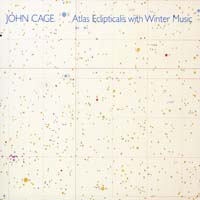 1993Winter Music
 1992Litany for the Whale
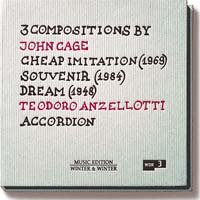 1977Cheap Imitation