ALBUM NOTESEuropera 5: discovering John Cage's artistry
Europera 5- Album Overview
John Cage's "Europera 5," released in 1987, is a landmark work in the avant-garde music scene, produced under the label Mode Records. This piece is an experimental operatic composition that challenges traditional notions of opera and music itself. "Europera 5" is part of Cage’s larger project, "Europera," which consists of several operas that explore the intersection of chance and sound, drawing upon the principles of indeterminacy that Cage famously championed.
The work features a unique structure, with an intricate arrangement of vocal and instrumental parts that are often performed simultaneously, creating a rich tapestry of sound. Cage collaborated with various musicians, including the renowned soprano, Judith Malafronte, and instrumentalists from the New York City Opera, bringing together a diverse array of talents to realize his vision.
The recording of "Europera 5" captures the essence of Cage’s philosophy, where silence and sound coexist, and where chance operations dictate the unfolding of the musical experience. The album stands out not just for its innovative composition but also for its cultural significance, as it encapsulates a period of radical experimentation in the arts during the late 20th century. Cage’s work in "Europera 5" continues to influence contemporary composers and challenge listeners to reconsider their perceptions of music and performance.
Review
"Europera 5" is a mesmerizing exploration of sound and silence that exemplifies John Cage's radical artistic vision. The album transcends conventional operatic forms, inviting listeners into a world where music is not merely a series of notes but a complex interplay of chance events. The sonic landscape is rich and layered, with moments of cacophony juxtaposed with serene passages that evoke a wide range of emotions.
Cage's use of indeterminacy allows for variations in each performance, making every listening experience unique. The vocal performances are hauntingly beautiful, while the instrumental sections provide a lush backdrop that complements the vocal lines. The blend of traditional operatic elements with avant-garde techniques creates a fascinating tension, making "Europera 5" both challenging and rewarding.
Cage’s artistry shines through in his ability to push boundaries, and this album serves as a testament to his genius. While some may find the work esoteric, those willing to embrace its complexities will discover a profound and engaging auditory experience.
Highlights
- Innovative use of indeterminacy creates a unique listening experience.
- Rich vocal performances that evoke deep emotional responses.
- Complex interplay between sound and silence, showcasing Cage's mastery.
Weak points
- May be challenging for traditional opera fans to appreciate.
- Some sections may come across as overly abstract or inaccessible.
- The album's experimental nature may not appeal to all listeners.
Overall evaluation
"Europera 5" is a bold statement in avant-garde music, representing John Cage's innovative spirit and his commitment to expanding the boundaries of artistry. While it may not resonate with everyone, it is undeniably a significant work that invites exploration and contemplation.
Personal rating: 8/10

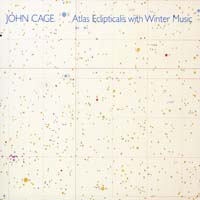 1993Winter Music
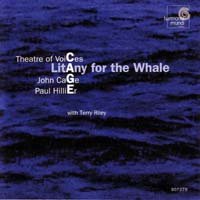 1992Litany for the Whale
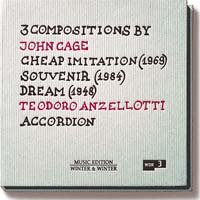 1977Cheap Imitation