ALBUM NOTESFreeman Etudes, Books One And Two: what John Cage wants you to feel
Freeman Etudes, Books One And Two- Album Overview
John Cage's "Freeman Etudes, Books One and Two" is a landmark recording that showcases the innovative spirit of one of the 20th century's most influential composers. Released in 1990 by the Mode Records label, this album features a series of solo violin pieces that explore the boundaries of sound and silence, a hallmark of Cage's avant-garde style. The "Freeman Etudes" were composed between 1977 and 1990 and are the culmination of Cage's lifelong interest in chance operations and non-traditional musical forms.
The album is performed by renowned violinist Irvine Arditti, a key collaborator who has dedicated much of his career to bringing contemporary works to life. The pieces consist of intricate structures that challenge the performer to navigate through a maze of sounds, often leaving room for interpretation and spontaneity. Cage's ability to blend philosophical concepts with musical composition is evident throughout, as he encourages listeners to engage with the music on a deeper emotional level.
Each etude is a unique exploration of texture, rhythm, and silence, inviting the audience to experience music as a series of moments rather than a linear progression. This approach not only redefines the role of the performer but also the listener, urging them to find meaning in the spaces between the notes. The "Freeman Etudes" stand as a testament to Cage's genius, pushing the boundaries of what music can be and how it can be perceived.
Review
The "Freeman Etudes" exemplify John Cage's radical departure from traditional musical conventions, employing a sound palette that is as much about absence as it is about presence. The etudes are characterized by their minimalist aesthetics, where silence plays an integral role in the overall composition. Arditti's interpretation showcases a mastery of technique, allowing him to navigate the complex scores with fluidity and grace.
Cage’s artistic vision is deeply rooted in the idea of chance and spontaneity, and this is palpable in the performances. Each etude feels alive, as if it is being created in the moment, which can evoke a range of emotions from contemplation to disorientation. The music challenges listeners to reconsider their relationship with sound, making it an immersive experience rather than mere entertainment.
Overall, "Freeman Etudes, Books One and Two" is not just an album; it is an invitation to explore the depths of auditory experience, prompting you to listen not only with your ears but with your entire being.
Highlights
- Innovative exploration of sound and silence.
- Masterful performance by Irvine Arditti, bringing Cage's vision to life.
- Encourages deep emotional and philosophical engagement from the listener.
Weak points
- May be challenging for listeners unaccustomed to avant-garde music.
- Some tracks can feel disjointed or overly abstract.
- Lack of traditional melodic structures may alienate mainstream audiences.
Overall evaluation
"Freeman Etudes, Books One and Two" is a profound exploration of sound that embodies John Cage's revolutionary approach to music. It is an essential listen for those willing to engage with the complexities of contemporary composition.
Personal rating: 8/10


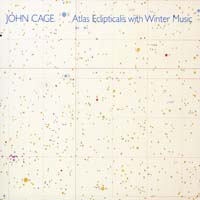 1993Winter Music
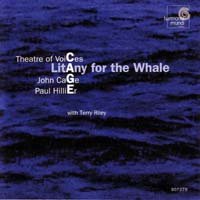 1992Litany for the Whale
 1977Cheap Imitation