

Album spotlight: John Cage – Sonatas And Interludes For Prepared Piano
Sonatas And Interludes For Prepared Piano- Album Overview
Released in 1948, "Sonatas and Interludes for Prepared Piano" is one of the most significant works by American composer John Cage, known for his avant-garde approach and experimentation with sound. This album, released under the Columbia Masterworks label, features a series of 16 sonatas and 4 interludes, specifically composed for a piano that has been altered or 'prepared' by placing various objects on or between the strings. This innovative technique results in a unique timbral palette, transforming the piano into a percussive instrument with unconventional sounds, ranging from muted clangs to resonant, bell-like tones.
The preparation of the piano involves the use of materials such as screws, rubber, and felt, which Cage meticulously designed to create a diverse sonic landscape. The recording was made in the late 1940s, during a period when Cage was exploring the intersections of music, philosophy, and art, influenced by Eastern philosophies, particularly Zen Buddhism. The work reflects Cage's belief in embracing chance and the unpredictable nature of sound, a hallmark of his later compositions.
Collaborating with notable performers, this album was recorded by pianist Maro Ajemian, who was crucial in bringing Cage's prepared piano compositions to life. The album is regarded as a milestone in contemporary classical music, pushing the boundaries of what music could be and challenging traditional notions of melody and harmony. Its influence can be felt across various genres, impacting not only classical music but also rock, jazz, and experimental music scenes. The sonatas and interludes have become standard repertoire for contemporary pianists and are often explored in academic settings, emphasizing Cage's lasting cultural significance.
Review
The soundscape of "Sonatas and Interludes for Prepared Piano" is an immersive journey that defies conventional musical expectations. Cage’s genius lies in his ability to combine rhythm and silence, creating an intricate tapestry of sound that captivates listeners. The compositions oscillate between moments of stark minimalism and complex textures, inviting the audience into a meditative state. There are no lyrics per se, but the music communicates profound emotions and ideas, reflecting Cage's philosophy of the beauty of randomness and the importance of listening. The artistic vision of the album resonates deeply, encouraging a reevaluation of what constitutes music and sound.
Highlights
- Innovative use of prepared piano creates a unique sound palette.
- Deeply meditative and introspective listening experience.
- Significant influence on contemporary music and avant-garde composers.
Weak points
- May be challenging for listeners accustomed to traditional musical forms.
- Some tracks may feel repetitive or abstract for mainstream audiences.
- Limited appeal due to its avant-garde nature and lack of conventional melodies.
Overall evaluation
"Sonatas and Interludes for Prepared Piano" stands as a landmark achievement in 20th-century music, showcasing John Cage's revolutionary approach to sound and composition. Its enduring legacy continues to inspire and challenge musicians and audiences alike.
Personal rating: 9/10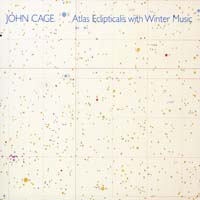 1993Winter Music
 1992Litany for the Whale
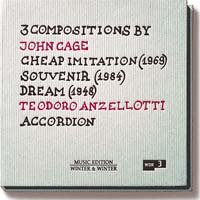 1977Cheap Imitation