
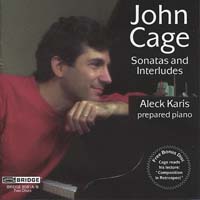
Is Six Melodies / Thirteen Harmonies John Cage's best work yet?
Six Melodies / Thirteen Harmonies- Album Overview
"Six Melodies / Thirteen Harmonies" is a significant work by the avant-garde composer John Cage, released in 1950. This album showcases Cage's pioneering spirit in the realm of contemporary classical music, reflecting his innovative approach to sound and silence. The album was issued by the prestigious label, Columbia Records, and features a collection of pieces that illustrate Cage's exploration of unconventional musical forms and structures.
The recordings feature various instrumental compositions, with Cage's use of prepared piano and other instruments showcasing his distinct style. The album includes pieces primarily composed for solo instruments, illustrating Cage's interest in the individual sonic qualities of each instrument. Collaborators on this album include notable musicians who were integral to the performance of Cage's works, although specific names may vary by recording.
Musically, Cage's "Six Melodies" and "Thirteen Harmonies" delve into the realms of dissonance and unique rhythmic patterns, challenging listeners' expectations and inviting them into a contemplative soundscape. The work is significant not only for its artistic merit but also for its impact on the development of minimalist music and its influence on later generations of composers. Its release marked another pivotal moment in Cage's career, further establishing him as a key figure in 20th-century music.
Review
The sound of "Six Melodies / Thirteen Harmonies" is a testament to Cage's unwavering commitment to experimentation. Each piece is a journey, filled with unexpected turns and moments of quiet introspection that challenge conventional listening. The use of silence, a hallmark of Cage's philosophy, is particularly striking here, as it allows the listener to engage with the nuances of each note and rhythm. The melodies are both haunting and serene, evoking a range of emotions that resonate deeply.
Artistically, Cage pushes the boundaries of what music can be, blurring the lines between melody and noise, structure and chaos. His vision of music as an experience, rather than just a product, is palpable throughout the album. While the tracks do not follow traditional song structures, they invite a meditative state that encourages listeners to find their interpretations within the soundscapes. The work stands as a reflection of Cage's philosophical beliefs about chance and the role of the audience in the creation of music.
Highlights
- Innovative use of prepared piano enhances the listening experience.
- Challenges conventional music forms and encourages new interpretations.
- Rich emotional depth in each piece invites introspection and contemplation.
Weak points
- Might be inaccessible to listeners unfamiliar with avant-garde music.
- Lack of traditional structure may deter some from engaging fully.
- Limited commercial appeal compared to more mainstream works.
Overall evaluation
"Six Melodies / Thirteen Harmonies" is undoubtedly a landmark in John Cage's discography, showcasing his innovative spirit and unique approach to composition. While it may not resonate with every listener, its artistic significance and the challenge it presents offer a rewarding experience for those willing to engage with its complexities.
Personal rating: 8/10 1993Winter Music
 1992Litany for the Whale
 1977Cheap Imitation