

John Cage-Indeterminacy: New Aspect of Form in Instrumental and Electronic Music – Indeterminacy: New Aspect of Form in Instrumental: a sonic journey
Album overview
Released in 1994 by the label Mode Records, "Indeterminacy: New Aspect of Form in Instrumental" is a seminal work by the avant-garde composer John Cage, renowned for his experimental approach to music. This album presents a unique blend of instrumental and electronic compositions that reflect Cage's philosophy of indeterminacy, a concept that embraces chance and uncertainty in the creative process. The recording features a range of collaborators, including sound artists and performers who explore the boundaries of musical form and structure. Cage's use of unconventional instruments, alongside electronic manipulation, creates a rich tapestry of sound that defies traditional musical conventions.
This album is notable for its exploration of text and sound, as Cage reads from a collection of anecdotes that serve as a backdrop to the instrumental pieces. The tracks are not strictly defined, allowing for a degree of improvisation and spontaneity that is characteristic of Cage's work. The significance of "Indeterminacy" lies not only in its innovative soundscapes but also in its cultural impact, influencing generations of musicians, composers, and sound artists who seek to challenge the norms of musical composition. It serves as a testament to Cage's lasting legacy in the realm of contemporary music and sound art.
Review
John Cage’s "Indeterminacy: New Aspect of Form in Instrumental" is nothing short of a sonic exploration that transcends conventional boundaries. The album's sound is an intricate weave of spontaneous compositions and text-based narratives, delivering an experience that is both immersive and cerebral. The juxtaposition of Cage's spoken word against the backdrop of unpredictable instrumental arrangements invites listeners into a world where music is not merely to be heard, but felt and interpreted uniquely by each individual. The electronic elements further enhance this experience, adding layers of complexity and depth that challenge traditional listening practices.
Musically, the album reflects Cage's avant-garde vision by pushing the limits of what can be considered music. The indeterminate nature of the compositions allows for a diverse range of interpretations, ensuring that no two listens are alike. This unpredictability is both exhilarating and disconcerting, drawing listeners into a contemplative state as they navigate through the soundscapes. Cage's artistic vision, rooted in the philosophy of chance, manifests brilliantly in this work, making it a pivotal contribution to the discourse on experimental music. It invites ongoing dialogue about the role of intention, chance, and listener engagement in the creation of sound art.
Highlights
- Innovative blending of spoken word and instrumental music.
- Exploration of chance and indeterminacy in composition.
- Rich, layered soundscapes that challenge traditional listening.
Weak points
- May be challenging for mainstream listeners to engage with.
- Some tracks may feel disjointed or lacking in cohesion.
- The experimental nature may not appeal to all musical tastes.
Overall evaluation
John Cage’s "Indeterminacy: New Aspect of Form in Instrumental" stands as a landmark achievement in experimental music, offering a profound exploration of sound, chance, and listener interaction. It is a must-listen for those interested in avant-garde art.
Personal rating: 8/10 ```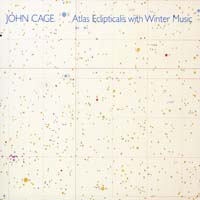 1993Winter Music
 1992Litany for the Whale
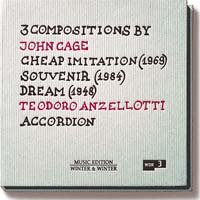 1977Cheap Imitation