ALBUM NOTESJohn Cage: Three Dances / Steve Reich: Four Organs: the story John Cage wants to tell
John Cage: Three Dances / Steve Reich: Four Organs- Album Overview
The album "John Cage: Three Dances / Steve Reich: Four Organs," released in 1975 on the Nonesuch label, showcases two pivotal works in the realm of avant-garde music. The first half of the album features Cage's "Three Dances," a composition that reflects his innovative approach to rhythm, chance, and the use of silence. Originally composed in 1945 for the Merce Cunningham Dance Company, these pieces highlight Cage's ability to blend music with movement, emphasizing the spatial and temporal aspects of sound.
The second half of the album presents Steve Reich's "Four Organs," a landmark piece in minimalist music, composed in 1970. This work, characterized by its repetitive phasing structures, pushes the boundaries of traditional music forms and emphasizes the role of time in musical perception. Both compositions exemplify the radical shifts in music during the 20th century, with Cage's aleatoric methods contrasting sharply with Reich's meticulously crafted patterns.
The recording features skilled performances that bring out the intricacies of both composers' visions. Collaborators include members of the renowned New York ensemble, who deliver these challenging pieces with precision and sensitivity. This album not only serves as an essential listening experience for fans of contemporary classical music but also as a testament to the evolving narrative of 20th-century music, particularly the intersection of chance and structure.
Review
"John Cage: Three Dances / Steve Reich: Four Organs" is a compelling exploration of sound that encapsulates the philosophical and artistic trajectories of its titular composers. Cage's "Three Dances" is an adventurous foray into the unpredictable, where the music often feels spontaneous, inviting listeners to engage with each moment as it unfolds. The rhythmic playfulness is infectious, showcasing Cage's belief in the interconnectedness of music and life.
In contrast, Reich's "Four Organs" offers a more cerebral experience, steeped in minimalist aesthetics. The repetitive motifs create a meditative state, drawing listeners into a trance-like experience that challenges their perception of time and musical form. The juxtaposition of Cage's fluidity against Reich's structured minimalism creates a rich dialogue throughout the album, emphasizing the diverse approaches to composition that emerged in the 20th century.
Overall, the album is a masterclass in contrasting styles and philosophies that still resonate with contemporary audiences. Each track serves not just as an auditory experience, but as a philosophical statement on the nature of music itself.
Highlights
- Cage's innovative use of silence and rhythm in "Three Dances."
- Reich's hypnotic phasing techniques in "Four Organs."
- The seamless integration of dance and music in Cage's compositions.
Weak points
- Some listeners may find the minimalist approach of Reich's piece challenging to engage with.
- The album's experimental nature may not appeal to traditional classical music fans.
- Limited mainstream recognition may hinder appreciation of its cultural significance.
Overall evaluation
"John Cage: Three Dances / Steve Reich: Four Organs" stands as a significant contribution to contemporary classical music, highlighting the divergent yet complementary philosophies of two musical pioneers. This album invites listeners to appreciate the complexities and beauty of sound in its many forms.
Personal rating: 8/10

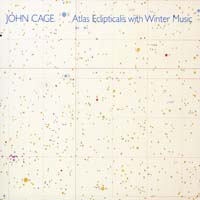 1993Winter Music
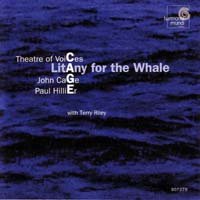 1992Litany for the Whale
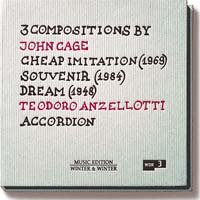 1977Cheap Imitation