
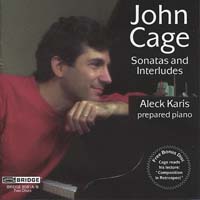
John Cage raises the bar with Two? / Two? / Five² / Five? / Seven / Seven²
Two? / Two? / Five² / Five? / Seven / Seven²- Album Overview
Released in 1993, "Two? / Two? / Five² / Five? / Seven / Seven²" is a significant work by the avant-garde composer John Cage, known for his innovative and often provocative approach to music. This album showcases Cage's continued exploration of chance music and indeterminacy, principles that have defined much of his career. It was released by the prestigious label Mode Records, which is dedicated to the preservation and promotion of contemporary classical music.
The album comprises a series of compositions that reflect Cage's fascination with silence, sound, and the unpredictable nature of performance. Each piece features a unique combination of instruments and structures, allowing performers to interpret the scores in various ways. Notable collaborators on this recording include the esteemed ensemble of the New York-based group, the Sonic Arts Union, which has a rich history of presenting Cage's works. The album includes compositions that challenge traditional notions of rhythm and melody, emphasizing Cage's belief that music can exist in a myriad of forms.
Culturally, this album is significant as it encapsulates Cage's legacy as a pioneer of modern music, influencing not only contemporary classical musicians but also artists in various genres, including pop, rock, and experimental music. The release of "Two? / Two? / Five² / Five? / Seven / Seven²" reaffirms Cage's commitment to pushing the boundaries of what music can be, demonstrating his lasting impact on the artistic landscape.
Review
The sound of "Two? / Two? / Five² / Five? / Seven / Seven²" is as eclectic as it is profound. Cage masterfully intertwines silence and sound, creating an auditory experience that is both challenging and rewarding. The compositions invite listeners to engage with the music on a deeper level, encouraging them to consider the space between notes just as much as the notes themselves. Cage's use of unconventional instruments and non-traditional techniques results in a sonic landscape that is rich with texture and nuance.
While there are no lyrics in the traditional sense, the artistic vision of Cage is palpable throughout the album. Each track serves as a meditation on the nature of sound and the act of listening, aligning with Cage's philosophy that music is not just about what is played, but also about how it is perceived. The album demands active participation from its audience, pushing them to confront their preconceptions about music.
Highlights
- Innovative use of silence and sound, creating a unique listening experience.
- Rich textural elements that challenge traditional notions of music.
- Strong cultural significance, reinforcing Cage's legacy as a modern music pioneer.
Weak points
- The abstract nature may not appeal to mainstream listeners.
- Some tracks may feel overly long or meandering to those unfamiliar with avant-garde music.
- Lack of conventional structure could be off-putting for traditional music fans.
Overall evaluation
"Two? / Two? / Five² / Five? / Seven / Seven²" is a bold statement from John Cage that continues to resonate within the realms of contemporary music. It challenges listeners to rethink their relationship with sound, silence, and the very definition of music itself. While it may not cater to all tastes, its artistic integrity and innovative spirit make it a must-listen for those willing to explore the avant-garde.
Personal rating: 8/10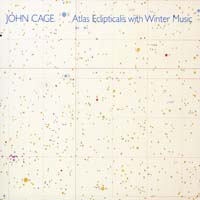 1993Winter Music
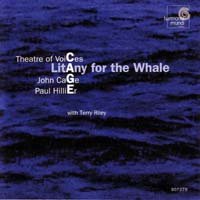 1992Litany for the Whale
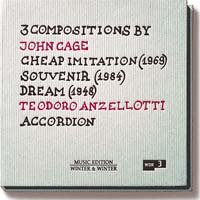 1977Cheap Imitation