ALBUM NOTESUnpacking John Cage's Thirty Pieces For Five Orchestras / Music For Pian
Thirty Pieces For Five Orchestras / Music For Pian- Album Overview
Released in 1960, "Thirty Pieces For Five Orchestras / Music For Pian" showcases the innovative genius of American composer John Cage, a pivotal figure in the 20th-century avant-garde music movement. This album, released on the Nonesuch label, is a double feature that includes two distinct works: "Thirty Pieces For Five Orchestras," composed in 1954, and "Music For Pian," composed in 1952. Cage's groundbreaking work is characterized by his exploration of chance music, silence, and alternative notations, inviting listeners to engage with sound in unconventional ways.
"Thirty Pieces For Five Orchestras" consists of a series of short, varied pieces, each employing different orchestral textures and techniques, emphasizing Cage's interest in the spatial distribution of sound. The orchestration is remarkable for its intricate layering and use of unconventional instruments, reflecting Cage's avant-garde approach. Meanwhile, "Music For Pian" presents a solo piano composition that further investigates Cage's philosophy of sound as an experience rather than a mere auditory event.
The recording features prominent collaborators, including influential performers and orchestras that contributed to the realization of Cage's complex scores. This album not only exemplifies Cage's technical skill but also his cultural significance, as it challenges traditional boundaries of music and performance. It invites a broader understanding of what constitutes music, thus cementing Cage's legacy as a revolutionary figure in contemporary music.
Review
Cage's "Thirty Pieces For Five Orchestras / Music For Pian" is a fascinating exploration of sound and silence, pushing the envelope of what music can be. The orchestral pieces are a tapestry of textures and timbres that defy conventional melodic structures, creating a unique auditory experience that is both challenging and rewarding. The listener is often required to engage actively with the music, as Cage's use of silence and chance operations invites moments of reflection and contemplation.
The piano work, "Music For Pian," serves as a stark contrast, offering a more intimate connection with the instrument. The sparse yet impactful notes resonate with a haunting beauty, challenging the listener to find meaning in the spaces between sounds. Cage's artistic vision is clear throughout the album: he seeks not only to compose but to provoke thought and redefine the listener's relationship with music.
However, this avant-garde approach may alienate some traditional listeners who favor structured compositions. Cage's works demand a certain openness to experience music as fluid and non-linear, which can be both a strength and a complication.
Highlights
- Innovative orchestration that challenges conventional music structures.
- Deep exploration of silence and sound, prompting active listening.
- Rich cultural significance in advancing avant-garde music and redefining musical boundaries.
Weak points
- May be inaccessible to listeners unfamiliar with avant-garde music.
- Some pieces could feel disjointed due to their experimental nature.
- Lack of traditional melodies may deter those seeking conventional musical forms.
Overall evaluation
"Thirty Pieces For Five Orchestras / Music For Pian" is a testament to John Cage's groundbreaking contributions to music, inviting listeners to expand their definitions of sound and silence. While it may not cater to everyone's taste, its artistic audacity and cultural impact are undeniable.
Personal rating: 8/10

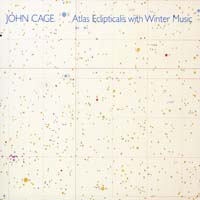 1993Winter Music
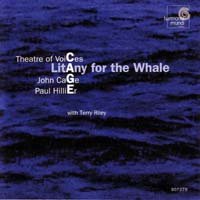 1992Litany for the Whale
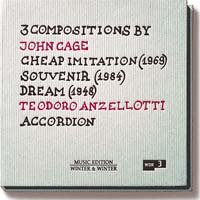 1977Cheap Imitation