
Diving deep into Ten / Ryoanji / Fourteen by John Cage
Ten / Ryoanji / Fourteen- Album Overview
Released in 1993 under the esteemed label of Mode Records, "Ten / Ryoanji / Fourteen" showcases the innovative compositions of John Cage, a pivotal figure in the avant-garde music scene. This album is a profound exploration of Cage's philosophies surrounding chance operations and indeterminacy, a reflection of his long-held belief that silence and the environment are integral components of musical experience. The album features three primary pieces: "Ten," "Ryoanji," and "Fourteen," which were composed between 1988 and 1992, highlighting Cage's ongoing evolution as a composer in his later years.
Collaborating with talented musicians, Cage's work on this album features the extraordinary talents of performers like David Tudor and others who interpret his complex scores. The recording process was intricate, as Cage often employed unconventional techniques and instruments, leading to a unique listening experience that challenges traditional notions of music. "Ryoanji," in particular, is inspired by a Zen rock garden, capturing the essence of tranquility and the impermanence of nature through sound. The album's release was significant in not only preserving Cage's legacy but also in pushing the boundaries of contemporary classical music.
The pieces included on "Ten / Ryoanji / Fourteen" stand as a testament to Cage's influence on modern music, illustrating his ability to blend Eastern philosophy with Western musical traditions. This album is a seminal work that resonates with listeners seeking a deeper understanding of sound, silence, and the myriad ways they interact in the world around us.
Review
"Ten / Ryoanji / Fourteen" is a mesmerizing experience that invites listeners into a world where music transcends conventional boundaries. The soundscapes created by Cage are often minimalist yet evocative, capturing the essence of the natural world and the subtleties of silence. The use of prepared piano in "Ten" creates dissonant yet harmonious textures, challenging the listener's expectations while maintaining a meditative quality.
Cage’s artistic vision shines through in "Ryoanji," where the influence of Zen philosophy manifests in the piece's sparse yet rich sound palette. This composition particularly emphasizes the beauty of silence and the spaces between notes, encouraging listeners to engage with their surroundings and contemplate the act of listening itself. "Fourteen" continues this exploration with a more complex interplay of sounds, showcasing Cage's innovative spirit and his ability to marry structure with chaos.
Overall, the album is a profound reflection on the nature of sound and the role of the listener, making it a significant addition to Cage’s discography and to the canon of contemporary classical music.
Highlights
- Innovative use of silence and indeterminacy creates a unique listening experience.
- Rich textures and harmonies showcase Cage’s mastery of composition.
- Deep philosophical underpinnings invite introspection and contemplation.
Weak points
- May be challenging for listeners unfamiliar with avant-garde music.
- The minimalist approach might not appeal to all musical tastes.
- Lengthy pieces could test the patience of casual listeners.
Overall evaluation
"Ten / Ryoanji / Fourteen" is a compelling exploration of sound, silence, and the philosophical undercurrents that define John Cage's work. While it may not cater to mainstream tastes, its artistic value and innovative spirit are undeniable.
Personal rating: 8/10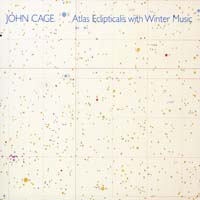 1993Winter Music
 1992Litany for the Whale
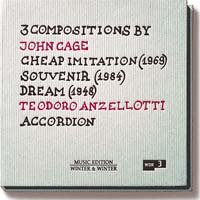 1977Cheap Imitation