

John Cage – Works For Piano & Prepared Piano, Vol. I: track-by-track perspective
Works For Piano & Prepared Piano, Vol. I- Album Overview
Released in 1988 on the Avant label, "Works For Piano & Prepared Piano, Vol. I" is a crucial collection showcasing the innovative compositions of American avant-garde composer John Cage. This album features a selection of Cage's groundbreaking pieces for piano and prepared piano, a technique he popularized, which alters the sound of the piano by placing objects between or on the strings. The recording was performed by the esteemed pianist David Tudor, a long-time collaborator of Cage, known for his deep understanding of Cage's complex and unconventional notations. The album includes iconic works such as "Sonatas and Interludes" and "Music for Piano," highlighting Cage's exploration of silence, chance, and the very nature of music itself. The production not only reflects the experimental ethos of the late 20th century but also serves as a pivotal moment in the transition from traditional Western classical music to more avant-garde practices. Cage’s influence on contemporary music, sound art, and performance is monumental, challenging listeners to rethink the boundaries of music and sound. This collection is essential for those interested in the evolution of musical form and the philosophical underpinnings of sound in art.
Review
In "Works For Piano & Prepared Piano, Vol. I," John Cage's artistic vision is vividly realized through a series of compositions that challenge conventional listening experiences. The soundscapes created in these tracks are a testament to Cage's belief that music could emerge from the most unexpected places. The prepared piano transforms familiar melodies into something alien and intriguing, as found in "Sonatas and Interludes," where the use of various materials creates a rich tapestry of tones and textures. Each piece invites the listener to engage with sound in an entirely new way, stripping away preconceived notions of melody and rhythm. The recording quality captures the nuances of Tudor's performance, allowing the subtleties of preparation to resonate. Cage’s exploration of silence as a musical element further enhances the listening experience, as moments of stillness punctuate the compositions, compelling listeners to reflect on the nature of sound itself. The album is not merely a collection of pieces but a philosophical exploration that resonates deeply within the avant-garde tradition.
Highlights
- Innovative use of prepared piano creating unique soundscapes.
- David Tudor's exceptional performance brings Cage's music to life.
- Significant contribution to the evolution of contemporary classical music.
Weak points
- The unconventional nature may alienate traditional classical listeners.
- Some pieces may require multiple listens to fully appreciate their complexity.
- Lack of mainstream appeal limits audience reach.
Overall evaluation
"Works For Piano & Prepared Piano, Vol. I" is an essential exploration of John Cage's radical approach to music, blending philosophy, performance, and sound in a way that remains highly relevant. It is a must-listen for those interested in the boundaries of musical expression.
Personal rating: 9/10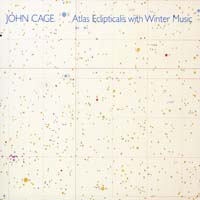 1993Winter Music
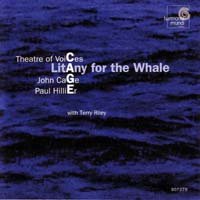 1992Litany for the Whale
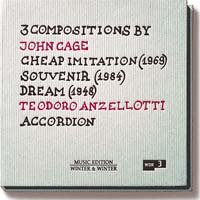 1977Cheap Imitation