ALBUM NOTESUnpacking John Cage's Cage & Hiller: Hpschd / Johnston: String Quart
Cage & Hiller: Hpschd / Johnston: String Quart- Album Overview
Released in 1969, "Cage & Hiller: Hpschd / Johnston: String Quart" is a significant work that showcases the experimental genius of John Cage, one of the most influential figures in avant-garde music. This album is a testament to Cage's innovative approach to sound and composition, specifically through the lens of chance music and indeterminacy. The album features two distinct works: "Hpschd," a harpsichord piece composed by Cage, and "String Quartet," a work by composer David Johnston, which Cage influenced with his philosophies on sound.
"Hpschd" is notable for its use of multiple harpsichords and the incorporation of electronic sounds, creating a complex tapestry of tones that reflect Cage's fascination with the unpredictability of sound. The piece was recorded using a variety of techniques that included tape manipulation and live performance, pushing the boundaries of traditional music recording. The collaboration with other musicians and the use of technology was groundbreaking for its time, highlighting the intersection of music and multimedia.
The album was released under the esteemed Columbia Masterworks label, known for its commitment to avant-garde and classical music. Cage's work, alongside Johnston’s contributions, reflects a pivotal moment in the 20th-century music landscape, where composers began to experiment with form, structure, and the very definition of music itself. The cultural significance of this album lies in its challenge to the listeners' perceptions, inviting them to experience music not just as a series of notes but as an evolving dialogue between silence and sound.
Review
Cage's "Hpschd" is a sprawling exploration of sound that defies conventional musicality. The layers of harpsichord, often accompanied by electronic pieces, create an immersive listening experience that feels both chaotic and structured. The unpredictability inherent in Cage's work means that each listen can yield new sonic discoveries, making it a rich tapestry of auditory exploration.
In contrast, Johnston's "String Quartet" brings a more traditional ensemble into the mix, yet it is imbued with Cage's philosophy of chance and indeterminacy. The interplay between the strings offers a haunting yet beautiful soundscape that complements the harpsichord's complexity. The juxtaposition of these two works encapsulates the essence of experimental music in the late 20th century.
Overall, the album is not merely a collection of tracks but rather an artistic vision that challenges the listener to engage with each piece actively. Cage's influence is omnipresent, as he encourages a dialogue between the audience and the music, fostering a sense of participation rather than passive listening.
Highlights
- The innovative use of multiple harpsichords in "Hpschd" creates a unique auditory experience.
- Cage's philosophy of chance and indeterminacy challenges traditional music norms.
- The album is a landmark in the experimental music genre, influencing countless artists and composers.
Weak points
- The experimental nature may alienate traditional music listeners.
- Some may find the lack of structure disorienting or challenging to appreciate.
- The recording techniques may feel dated compared to contemporary standards.
Overall evaluation
"Cage & Hiller: Hpschd / Johnston: String Quart" stands as a pivotal work in the canon of avant-garde music that continues to resonate with those willing to explore its depths. Its experimental nature, while polarizing, invites an active engagement with sound.
Personal rating: 8/10


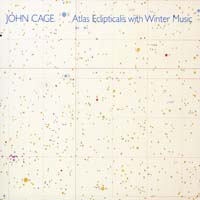 1993Winter Music
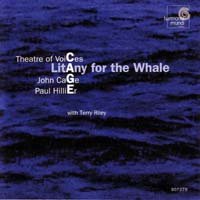 1992Litany for the Whale
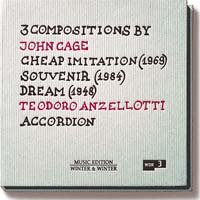 1977Cheap Imitation