
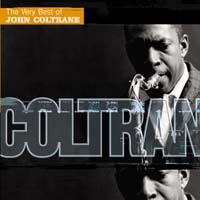
The Last Trane by John Coltrane: expectations vs reality
The Last Trane- Album Overview
"The Last Trane" is a posthumously released album by the legendary jazz saxophonist John Coltrane, released in 1966 by the Impulse! label. The album serves as a poignant testament to Coltrane's innovative spirit, showcasing recordings that were made during the final years of his life, a period marked by profound artistic exploration and spiritual evolution. The tracks on this album were compiled from various sessions recorded between 1961 and 1965, featuring some of Coltrane's most significant collaborators, including McCoy Tyner on piano, Jimmy Garrison on bass, and Elvin Jones on drums. The album includes previously unreleased material, offering listeners a glimpse into Coltrane's creative process. It features tracks like "My Favorite Things," which showcases his ability to transcend traditional jazz boundaries, and "A Love Supreme," a suite that reflects his deep spirituality and commitment to expressing his art as a form of devotion. The recording sessions were marked by Coltrane's relentless pursuit of musical truth, pushing the limits of harmony and rhythm. "The Last Trane" not only captures the essence of Coltrane's sound but also stands as a significant cultural artifact of the 1960s, a period when jazz was evolving into a more avant-garde form. This album has been influential in shaping the future of jazz, encouraging generations of musicians to explore beyond conventional structures.
Review
The sound of "The Last Trane" is a rich tapestry of improvisation and deeply felt emotion, reflecting Coltrane's mastery of the saxophone. The album does not feature lyrics in the traditional sense, as Coltrane often communicated through his instrument, conveying profound ideas and feelings without words. His artistic vision during this time was one of liberation and exploration, and the music feels both personal and universal. The interplay between the musicians is exceptional, with each player complementing Coltrane's leading voice. Listeners familiar with Coltrane's earlier works might expect a continuation of his modal jazz style, but "The Last Trane" challenges those expectations by incorporating elements of free jazz, showcasing his willingness to experiment with form and structure. The album is a testament to Coltrane's belief in the transformative power of music, as it invites listeners on a journey through intricate melodies and complex rhythms, ultimately leading to moments of transcendence.
Highlights
- The exceptional synergy between Coltrane and his band members, creating a dynamic listening experience.
- The emotional depth and spiritual resonance of tracks like "A Love Supreme," which showcase Coltrane's personal journey.
- The innovative approach to improvisation that pushes the boundaries of traditional jazz.
Weak points
- The album may be challenging for listeners unfamiliar with avant-garde jazz due to its complex structures.
- Some tracks may feel unfinished or less polished compared to Coltrane's more commercially successful albums.
- The posthumous nature of the release might leave some fans feeling disconnected from the context of the original recordings.
Overall evaluation
"The Last Trane" is an essential listen for any jazz enthusiast, offering a raw and authentic glimpse into the mind of one of the genre's greatest innovators. While it may not be as accessible as some of Coltrane's earlier works, its significance in the evolution of jazz cannot be overstated.
Personal rating: 8/10 1962Coltrane Plays the Blues
 1961Thelonious Monk with John Coltrane
 1961Settin' the Pace
 1961My Favorite Things
 1961Lush Life
 1959The Cats
 1959Giant Steps
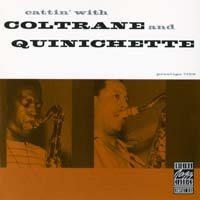 1959Cattin' with Coltrane and Quinichette
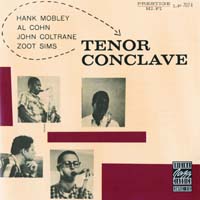 1957Tenor Conclave
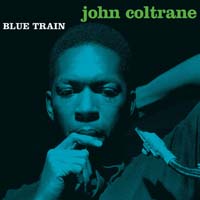 1957Blue Train