ALBUM NOTESZyklus - Refrain - Kontakte: the story Karlheinz Stockhausen wants to tell
Zyklus - Refrain - Kontakte- Album Overview
The album "Zyklus - Refrain - Kontakte" by Karlheinz Stockhausen, released in 1964, is a pivotal work in the realm of avant-garde music, showcasing the pioneering spirit of electronic and serial composition. Released under the Deutsche Grammophon label, the album features three seminal pieces: "Zyklus" for one performer, "Refrain" for four percussionists, and "Kontakte," which is a groundbreaking work combining electronic sounds with live instruments.
"Zyklus," a circular score for a solo percussionist, challenges traditional notions of performance and composition through its innovative structure that allows for a non-linear interpretation. "Refrain," meanwhile, emphasizes the interplay between sound and silence, utilizing unique rhythmic patterns that only a few percussionists can master. "Kontakte," one of Stockhausen's most significant compositions, integrates electronically generated sounds with acoustic instruments, creating a rich tapestry of auditory experiences.
These works not only reflect Stockhausen's commitment to exploring the boundaries of sound but also represent a significant moment in the evolution of contemporary music. The album is often noted for its complexity and the way it interacts with the listener's perception of time and space. Collaborators on this project included renowned musicians such as Pierre Boulez and various percussionists who were pivotal in bringing Stockhausen's vision to life. The aesthetic and philosophical inquiries presented in these compositions resonate deeply within the cultural context of the 1960s, a time of experimentalism and a search for new forms of expression.
Review
"Zyklus - Refrain - Kontakte" is an audacious exploration of sound that showcases Stockhausen's mastery in manipulating timbre and rhythm. The album defies conventional musical structures, instead opting for a more abstract and cerebral approach that requires active engagement from the listener. The intricate rhythms and spatial configurations in "Zyklus" invite performers to interpret the score uniquely, making each performance a distinct experience.
In "Refrain," the dialogue between the percussionists serves as a demonstration of musical conversation, where silence plays as significant a role as sound. "Kontakte" takes this further, merging live performance with electronic manipulation, creating an immersive soundscape that feels both futuristic and timeless. The artistic vision of Stockhausen—seeking to transcend the physicality of sound and engage deeper philosophical questions—remains potent and relevant.
However, the avant-garde nature of this album may not resonate with all listeners, as it requires a willingness to embrace the unfamiliar. The challenge lies in the abstraction and complexity of the compositions, which may alienate those accustomed to more traditional musical forms. Nevertheless, for those open to the experience, the album is a rewarding journey through the intricacies of sound.
Highlights
- Groundbreaking integration of electronic and acoustic elements in "Kontakte."
- Innovative structure and interpretation possibilities in "Zyklus."
- Rich rhythmic dialogue showcased in "Refrain."
Weak points
- Complexity may deter casual listeners.
- Abstract nature can lead to a lack of immediate emotional connection.
- Requires active listening for full appreciation, which may not suit all audiences.
Overall evaluation
"Zyklus - Refrain - Kontakte" is a landmark album that redefines the boundaries of music and sound. Stockhausen's visionary approach continues to inspire and challenge musicians and listeners alike.
Personal rating: 9/10


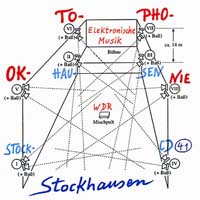 1994Oktophonie
 1980Donnerstag aus Licht
 1969Hymnen
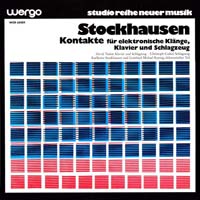 1960Kontakte