
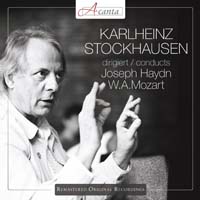
Unpacking Karlheinz Stockhausen's Helikopter-quartett
Helikopter-quartett- Album Overview
"Helikopter-quartett," composed by the avant-garde German composer Karlheinz Stockhausen, was released in 1995. This unique piece is part of his larger work, "KLANG," which consists of multiple compositions reflecting Stockhausen's exploration of sound, spatialization, and the interplay between music and technology. The album, issued by the Stockhausen Foundation for Music, features an innovative approach where four musicians perform from within four helicopters, creating a truly immersive auditory experience. Each player is equipped with a wireless microphone and headphones, allowing them to interact with the sounds produced in real-time while flying in tandem.
The quartet comprises two violins, a viola, and a cello, performed by renowned musicians including the Arditti Quartet, who are known for their dedication to contemporary classical music. The recording captures the intricate choreography of sound as the helicopter blades create a backdrop of mechanical noise, blending with the harmonic textures of the string instruments. This structural innovation not only challenges traditional concert formats but also pushes the boundaries of what constitutes a musical performance.
"Helikopter-quartett" stands as a significant piece within the contemporary classical genre, illustrating Stockhausen's pioneering vision. The album is recognized for its bold exploration of spatial sound and its commentary on the relationship between music and technology, making it a milestone in modern composition. The work invites listeners to consider the implications of sound in space and time, reflecting Stockhausen's ongoing influence on experimental music and contemporary performance practices.
Review
"Helikopter-quartett" is an audacious exploration of sound and space that pushes the listener into a realm where music and environment collide. The innovative use of helicopters as a performance medium is not merely a gimmick; rather, it serves to enhance the auditory experience, creating a dynamic soundscape that is both thrilling and disorienting. The interplay between the mechanical sounds of the helicopters and the organic sounds of the string instruments generates a rich tapestry of textures, revealing Stockhausen's mastery of spatial composition.
The emotional resonance of the piece is enhanced by the musicians' exceptional skill, as they navigate the complexities of playing in such an unusual setting. The meticulous layering of sounds invites deep listening, urging the audience to engage with the nuances of the performance. There are moments of serene beauty interspersed with chaotic bursts of sound, reflecting the duality inherent in Stockhausen's work. While the music may challenge traditional notions of form and structure, it ultimately rewards the adventurous listener with a profound experience that transcends conventional boundaries.
Highlights
- Innovative use of helicopters creates a unique auditory experience.
- Exceptional performance by the Arditti Quartet, showcasing technical prowess.
- Complex layering of sounds that invites deep listening and engagement.
Weak points
- The unconventional format may alienate traditional classical music audiences.
- Some listeners may find the chaotic elements overwhelming or disorienting.
- The piece's length can be demanding for those unfamiliar with avant-garde music.
Overall evaluation
"Helikopter-quartett" stands as a testament to Stockhausen's innovative spirit and his ability to redefine the concert experience. While it may not appeal to everyone, its artistic vision and execution are undeniably significant in the landscape of contemporary music. Personal rating: 8/10
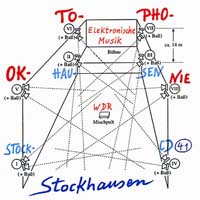 1994Oktophonie
 1980Donnerstag aus Licht
 1969Hymnen
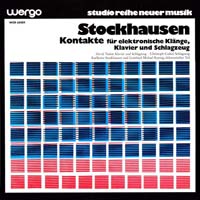 1960Kontakte