ALBUM NOTESKarlheinz Stockhausen experiments boldly on Piano Music Of The Darmstadt School, Vol. 1
Piano Music Of The Darmstadt School, Vol. 1- Album Overview
The album "Piano Music Of The Darmstadt School, Vol. 1," featuring the groundbreaking works of Karlheinz Stockhausen, was released in 1999 under the label Stockhausen-Verlag. This collection is a pivotal representation of the avant-garde movement in the post-World War II era, showcasing the innovative techniques and compositional philosophies that emerged from the Darmstadt School. Stockhausen, one of the most influential composers of the 20th century, was a central figure in this movement, which sought to redefine the parameters of music through experimentation and the exploration of new sounds.
The recording features a selection of Stockhausen's pieces for piano, highlighting his unique approach to rhythm, melody, and texture. Notably, the album includes works such as "Klavierstück IX," which exemplifies his exploration of spatialization and time structures. The pianist, who collaborates with Stockhausen on this album, brings to life the intricate and often challenging scores that reflect the composer's desire to push the boundaries of traditional music. The production of the album was meticulous, with a focus on capturing the subtleties and dynamics of the piano in a way that honors Stockhausen's original intentions.
The cultural significance of this album cannot be understated; it serves as a testament to the evolution of contemporary classical music and the radical ideas that emerged during the mid-20th century. By venturing into uncharted territory, Stockhausen and his contemporaries paved the way for future generations of composers and musicians, making this album a crucial piece of musical history.
Review
Stockhausen's "Piano Music Of The Darmstadt School, Vol. 1" is a striking exploration of sound that challenges listeners to engage with music in an entirely new way. The soundscapes are rich and textured, with the piano serving as a conduit for Stockhausen's innovative ideas. The compositions are both complex and thought-provoking, often eschewing traditional harmonic structures for a more abstract approach. This can make for a demanding listen, yet it is precisely this challenge that showcases Stockhausen's artistic vision. The way he manipulates rhythm and silence invites the audience to experience music as a living, breathing entity, rather than a static form.
The album does not just present music but rather an auditory experience that engages the intellect as much as it does the emotions. Each track is meticulously crafted, revealing layers of meaning upon multiple listens. Stockhausen's ability to balance chaos and order results in compositions that are as engaging as they are disorienting. This duality is what makes the album a landmark in contemporary classical music and a vital record of the Darmstadt School's legacy.
Highlights
- The innovative use of silence and rhythm in Stockhausen's compositions.
- The exceptional performance by the pianist, bringing nuance to complex scores.
- The album's historical context, representing a significant moment in 20th-century music.
Weak points
- The abstract nature of the compositions may alienate casual listeners.
- Some tracks may be perceived as overly demanding or inaccessible.
- Lack of traditional melodic structures may not appeal to all classical music fans.
Overall evaluation
"Karlheinz Stockhausen's Piano Music Of The Darmstadt School, Vol. 1" is a bold and significant work that captures the essence of avant-garde music. While it may challenge the listener, it ultimately rewards those willing to engage with its complexities.
Personal rating: 8/10


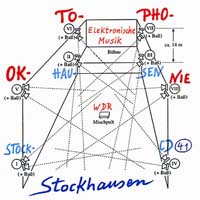 1994Oktophonie
 1980Donnerstag aus Licht
 1969Hymnen
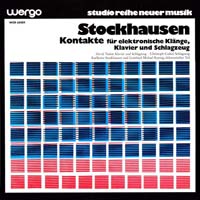 1960Kontakte