

Listening to Montag aus Licht by Karlheinz Stockhausen-Montag aus Licht
Album overview
"Montag aus Licht," composed by the pioneering German composer Karlheinz Stockhausen, is part of his monumental opera cycle, "Licht," which spans seven days of the week. Completed in 1984, "Montag aus Licht" (Monday from Light) is a blend of avant-garde classical music and theatrical performance that showcases Stockhausen's innovative use of technology and spatialization of sound. The opera features a variety of musical forces, including a large orchestra, vocalists, and electronic sounds, reflecting Stockhausen's commitment to expanding the boundaries of music and performance.
This work was released by the record label Deutsche Grammophon in 1993, following its premiere in 1984 at the Hamburg State Opera. The opera is known for its intricate structure and multi-layered musical ideas, highlighting Stockhausen's interest in the metaphysical and spiritual dimensions of music. Collaborators on "Montag aus Licht" include esteemed musicians and vocalists, complementing Stockhausen's vision with their interpretations of the complex score.
Musically, the piece is characterized by its use of unconventional forms, with elements of chance and improvisation woven throughout. It reflects Stockhausen's philosophical inquiries into the nature of sound and the relationship between music and the cosmos. The cultural significance of "Montag aus Licht" lies in its challenge to traditional operatic norms and its innovative approach to sound production, which has influenced countless composers and musicians in contemporary classical music.
Review
"Montag aus Licht" is an audacious and ambitious work that pushes the listener's understanding of what opera can be. The soundscapes crafted by Stockhausen are both mesmerizing and disorienting, creating an otherworldly experience that immerses the audience. The vocal performances are striking, blending operatic techniques with avant-garde expressions that challenge conventional singing styles. Stockhausen's use of electronics and spatial audio further enhances the listening experience, immersing the audience in a sonic environment that feels both alive and dynamic.
However, the piece can be difficult to digest for those unaccustomed to avant-garde music. The lack of traditional narrative structure and the abstract nature of the compositions may alienate some listeners, but for those willing to engage with it, the rewards are profound. Stockhausen's artistic vision shines through in the meticulous detail of the score and the way each element interacts with one another, creating a tapestry of sound that is rich in texture and meaning.
Highlights
- Innovative use of sound and technology.
- Striking vocal performances that push boundaries.
- Profound cultural and philosophical significance.
Weak points
- Can be challenging for mainstream audiences.
- Abstract structure may alienate traditional opera fans.
- Requires attentive listening to fully appreciate the nuances.
Overall evaluation
"Montag aus Licht" is a landmark work in contemporary classical music that exemplifies Karlheinz Stockhausen's genius and innovative spirit. While it may not cater to all musical tastes, it remains an essential piece for anyone interested in the evolution of opera and sound. The exploration of sound and meaning makes it a rewarding experience for those who dare to listen.
Personal rating: 8/10 ```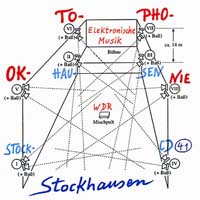 1994Oktophonie
 1980Donnerstag aus Licht
 1969Hymnen
 1960Kontakte