
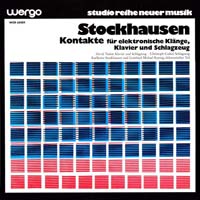
Unpacking Karlheinz Stockhausen-Kontakte's Kontakte
Album overview
"Kontakte" is a seminal electronic music composition by German composer Karlheinz Stockhausen, first released in 1964. This avant-garde piece is notable for its innovative use of electronic sounds, instrumental textures, and spatialization techniques. It was originally produced for a combination of electronic music, live instrumental performance, and tape manipulation, showcasing Stockhausen's fascination with the intersection of technology and music. The piece is structured into three parts: "For Piano", "For Percussion", and "For Electronic Music", all of which combine to create a cohesive yet diverse sonic landscape.
Stockhausen recorded "Kontakte" at the WDR (Westdeutscher Rundfunk) studio in Cologne, a hub for groundbreaking electronic music experimentation during the 20th century. Collaborators included musicians such as the pianist and percussionist who performed live alongside the electronic components, further blurring the lines between acoustic and electronic sound. The album was released under the Deutsche Grammophon label, which has a rich history of promoting avant-garde and classical music.
"Kontakte" is significant not only for its technical innovations but also for its influence on the development of electronic music as a genre. It reflects Stockhausen's broader artistic vision of music as a multi-sensory experience, integrating spatiality, rhythm, and timbre in ways that were groundbreaking for its time. The work has inspired countless musicians and composers, solidifying its status as a foundational piece in the canon of modern music.
Review
The sound of "Kontakte" is an exploration of the avant-garde, where Stockhausen masterfully intertwines electronic manipulation with live instrumentation. The piece opens with a delicate interplay of piano and electronic sounds that gradually evolves into a complex tapestry of rhythms and textures. One of the most striking aspects of the work is how it challenges traditional notions of harmony and melody, opting instead for a more abstract representation of sound. The spatialization of sound—where different audio elements are placed in various locations in the auditory field—creates a listening experience that is both immersive and disorienting. This unique approach allows listeners to engage with the music on multiple levels, prompting reflection on the nature of sound itself. While the absence of conventional lyrical content may deter some listeners, the emotive power of the music conveys a sense of exploration and discovery that is profoundly compelling.
Highlights
- Innovative fusion of electronic and acoustic sounds.
- Groundbreaking spatialization techniques enhance the listening experience.
- Significant influence on subsequent generations of composers and electronic musicians.
Weak points
- May be challenging for listeners unfamiliar with avant-garde music.
- Lengthy and abstract nature might deter casual listeners.
- Lack of traditional melodic structure can feel inaccessible.
Overall evaluation
"Kontakte" stands as a landmark achievement in electronic music, showcasing Stockhausen's visionary approach to sound and composition. It invites listeners into a complex world of auditory exploration, though it may not resonate with everyone. For those willing to engage with its challenges, "Kontakte" offers a rich and rewarding experience.
Personal rating: 9/10 ``` 2013Amour / Der Kleine Harlekin / Wochenkreis
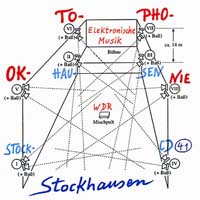 1994Oktophonie
 1980Donnerstag aus Licht
 1969Hymnen