

Mantra: the story Karlheinz Stockhausen wants to tell
Mantra- Album Overview
"Mantra," composed by the avant-garde German composer Karlheinz Stockhausen, was released in 1970 as part of his exploration into electronic music and spatial sound. The album, produced by Stockhausen himself, is a significant work within the realm of contemporary classical music and reflects his innovative approach to composition. It is released under the record label Deutsche Grammophon, known for its commitment to high-quality classical recordings.
The piece features a unique instrumentation, using two pianos and an array of electronic sounds, which creates a rich tapestry of sound that is both meditative and complex. The recording of "Mantra" took place at the Stockhausen Studio in Kürten, Germany, showcasing the composer’s dedication to blending live performance with technology. Collaborators on the album included pianist Aloys Kontarsky and other musicians who contributed to the live realization of Stockhausen's intricate score.
Musically, "Mantra" is characterized by its cyclical structures and the interplay between the acoustic and electronic elements. The score is meticulously crafted, with a focus on the mathematical and spiritual aspects of sound, which are central to Stockhausen's philosophy. The album's cultural significance lies in its pioneering use of electronic music, which paved the way for future generations of composers and musicians exploring the boundaries of sound and performance.
Overall, "Mantra" stands as a testament to Stockhausen's visionary approach and remains a critical part of his oeuvre, illustrating his ability to transcend traditional musical forms while delving into the metaphysical dimensions of music.
Review
"Mantra" is an audacious piece that encapsulates Stockhausen's artistic vision, merging complex musical ideas with a spiritual quest for sound. The album unfolds in a series of interwoven motifs, characterized by the hypnotic repetition that draws listeners into a meditative state. The synthesis of live piano performance with electronic manipulation creates an ethereal soundscape that challenges conventional listening experiences.
While the pianos provide a grounding element, the electronic sounds introduce an otherworldly layer, illustrating Stockhausen's mastery of both acoustic and electronic mediums. The interplay between these elements is both exhilarating and disorienting, reflecting the composer’s intent to push the boundaries of music and sound perception. Each listen reveals new nuances, making "Mantra" a rewarding experience for those willing to engage deeply with the material.
Highlights
- Innovative fusion of acoustic and electronic sounds that creates a unique listening experience.
- Complex, cyclical structures that encourage deep engagement and reflection.
- A profound exploration of spirituality and sound, showcasing Stockhausen's avant-garde vision.
Weak points
- The abstract nature may alienate casual listeners unaccustomed to avant-garde music.
- Lengthy compositions can feel repetitive to some, potentially testing patience.
- Limited accessibility due to its niche appeal within the broader music landscape.
Overall evaluation
"Mantra" is a landmark work that exemplifies Karlheinz Stockhausen's innovative spirit and mastery of sound. While it may not cater to all musical tastes, its intricate exploration of the relationship between man, music, and technology marks it as a significant contribution to contemporary classical music.
Personal rating: 8/10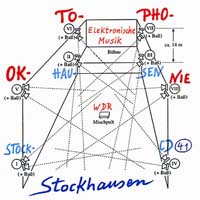 1994Oktophonie
 1980Donnerstag aus Licht
 1969Hymnen
 1960Kontakte