

Opus 1970: the next chapter for Karlheinz Stockhausen
Opus 1970- Album Overview
"Opus 1970" is an album by the avant-garde composer Karlheinz Stockhausen, released in 1970 under the Deutsche Grammophon label. This work is a significant entry in Stockhausen's oeuvre, showcasing his innovative approach to electronic music and spatial composition. The album features a collection of pieces that exemplify Stockhausen's exploration of sound and form during this period. It includes tracks such as "Mantra," which employs a unique system of melodic variations and rhythmic structures, and "Telemusik," a groundbreaking piece that integrates recorded sounds from around the world, presenting a tapestry of acoustic experiences that defy traditional musical boundaries. Stockhausen's collaboration with various musicians and technicians during the production of "Opus 1970" reflects the collective spirit of the Zeitgeist, as the 1970s marked a flourishing of experimental music. The album was recorded in the Stockhausen Studio in Kürten, Germany, a hub for his creative output, allowing for the meticulous crafting of sound layers and textures. This period in Stockhausen's career is notable for his deep engagement with the philosophical implications of music, as he sought to explore the relationship between sound and the listener's perception. "Opus 1970" stands as a testament to Stockhausen's influence on contemporary music, bridging the gap between classical traditions and modern experimental techniques. Its release was not just a continuation of Stockhausen's prolific output but also positioned him as a pivotal figure in the evolution of 20th-century music, influencing generations of composers and musicians who followed.
Review
The sound palette of "Opus 1970" is both challenging and rewarding, immersing listeners in a world where conventional musical structures dissolve into a rich, immersive sonic landscape. Stockhausen's artistic vision is evident in his meticulous attention to detail, crafting intricate layers of sound that invite listeners to engage on multiple levels. The album's exploration of electronic soundscapes, combined with live instrumentation, creates a dynamic interplay that is both cerebral and visceral. While the pieces may initially appear disjointed to the untrained ear, repeated listens reveal a complex architecture of rhythm and melody that is quintessentially Stockhausen. The use of varying sound sources, from electronic synthesizers to traditional instruments, reflects his commitment to breaking down the barriers between genres and cultures. This album does not merely present music; it engages with the listener's perception, encouraging an active exploration of sound rather than passive consumption. Overall, "Opus 1970" encapsulates Stockhausen's revolutionary approach to music, challenging audiences to reconsider their preconceived notions of what music can be, and positioning him as a true pioneer in the landscape of modern sound.
Highlights
- Innovative use of electronic and acoustic sounds.
- Complex layering of textures that rewards repeated listening.
- Strong cultural and philosophical context that enriches the listening experience.
Weak points
- May be inaccessible to listeners unfamiliar with avant-garde music.
- Some pieces lack a conventional melodic structure, which might deter casual listeners.
- Lengthy compositions can feel overwhelming and require significant attention.
Overall evaluation
"Opus 1970" is a landmark album that showcases Karlheinz Stockhausen's pioneering spirit and his ability to transcend traditional musical boundaries. While it may present challenges for some listeners, its profound depth and innovative sound make it an essential work for anyone interested in the evolution of contemporary music.
Personal rating: 8/10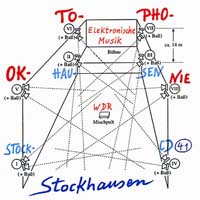 1994Oktophonie
 1980Donnerstag aus Licht
 1969Hymnen
 1960Kontakte