
Breaking down the themes in Momente (1965 Version) by Karlheinz Stockhausen
Momente (1965 Version)- Album Overview
"Momente," composed by Karlheinz Stockhausen and first premiered in 1965, represents a significant milestone in contemporary classical music. This avant-garde work was released under the Deutsche Grammophon label and is notable for its innovative approach to both composition and performance. The album is a realization of Stockhausen's ongoing exploration of the relationships between sound, space, and the human experience, marking a pivotal point in his oeuvre.
Stockhausen conceived "Momente" as a multi-part work that integrates various elements, including vocal solos, instrumental passages, and electronic sounds. The composition features a unique blend of traditional orchestral instruments and avant-garde techniques, showcasing Stockhausen's ability to transcend conventional musical boundaries. The recording was made with a diverse ensemble of musicians and vocalists, reflecting the collaborative spirit that Stockhausen valued in his work. Notable collaborators include soprano Ute Lemper and various instrumentalists who contributed to the complex textures and innovative soundscapes.
Thematically, "Momente" delves into the human condition, exploring notions of time, existence, and the ephemeral nature of experience. The album consists of multiple sections that invite listeners to engage with the interplay of sound and silence, emphasizing the transformative power of music. "Momente" stands as a testament to Stockhausen's position as a pioneer in the realm of electronic music and his influence on generations of composers and musicians.
Review
The sound of "Momente" is a rich tapestry of contrasting elements, where the human voice intertwines with electronic manipulation and acoustic instruments. Stockhausen's artistic vision is evident in his meticulous attention to detail, creating an immersive listening experience that challenges the listener's perceptions of music. The work is both abstract and accessible, inviting audiences to interpret its meaning through personal reflection.
The vocal performances are particularly striking, showcasing a range of emotions and techniques that enhance the overall atmosphere of the piece. Stockhausen's use of silence is equally compelling; it serves as a powerful tool that accentuates the moments of sound, making the listener acutely aware of the spaces between notes. The interplay of chaos and order within the composition reflects the complexities of life, echoing Stockhausen's philosophical inquiries into existence.
Highlights
- Innovative blend of vocal and instrumental elements.
- Rich thematic exploration of the human experience.
- Exceptional performances by a diverse ensemble of musicians.
Weak points
- May be challenging for traditional classical music listeners.
- Lengthy sections could feel repetitive to some audiences.
- Abstract concepts may lead to varied interpretations, potentially alienating some listeners.
Overall evaluation
"Momente (1965 Version)" is a landmark work that showcases Stockhausen's groundbreaking vision and creativity. With its intricate layers and profound themes, it remains a significant contribution to the world of contemporary classical music.
Personal rating: 9/10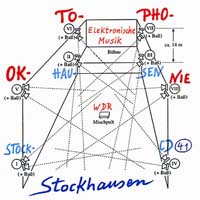 1994Oktophonie
 1980Donnerstag aus Licht
 1969Hymnen
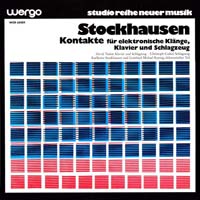 1960Kontakte