

Karlheinz Stockhausen experiments boldly on 20th Century Music For Unaccompanied Clarinet
20th Century Music For Unaccompanied Clarinet- Album Overview
"20th Century Music For Unaccompanied Clarinet" is a significant album by the renowned composer Karlheinz Stockhausen, released in 1970 under the label Deutsche Grammophon. This album is part of Stockhausen's broader exploration of avant-garde music and showcases the clarinet's capabilities in a contemporary classical context. The recording features solo clarinetist, who deftly navigates Stockhausen's complex compositions that challenge traditional notions of melody, harmony, and rhythm.
The album consists of a series of pieces that reflect Stockhausen's innovative techniques and his desire to expand the instrumental vocabulary of classical music. It includes works like "Zodiac," which is notable for its intricate use of extended techniques such as multiphonics and flutter-tonguing, pushing the boundaries of what the clarinet can achieve. Stockhausen's approach to sound and silence, as well as his unique method of notation, is a hallmark of the pieces found on this album.
This work is not only a technical showcase but also a cultural artifact, reflecting the experimental spirit of the late 20th century. Stockhausen's influence can be felt across various genres, including electronic music and jazz, making this album a vital part of 20th-century musical discourse. The recording sessions were meticulous, aiming to capture the authenticity and nuances of the clarinet sound, resulting in a stark yet rich auditory experience. The album is essential for those interested in the evolution of modern classical music and the role of solo instruments within it.
Review
The sound of "20th Century Music For Unaccompanied Clarinet" is a profound exploration of the clarinet's sonic possibilities, characterized by Stockhausen's visionary compositional style. Each track serves as a testament to his avant-garde ethos, offering a palette of sounds that challenge listeners to reconsider their expectations of instrumental music. The clarinetist's mastery is evident as they maneuver through complex rhythms and unconventional techniques, bringing to life Stockhausen's intricate scores.
The artistic vision behind this album is rooted in the desire to transcend traditional musical forms and explore the essence of sound itself. Stockhausen’s work demands active listening, drawing the audience into a world where silence and sound coexist in a delicate balance. While the album may be daunting for casual listeners, it rewards those willing to venture into its depths with moments of profound beauty and insight.
Highlights
- Innovative use of extended techniques that redefine the clarinet's capabilities.
- Complex compositions that engage listeners on multiple levels.
- Rich soundscapes that demonstrate Stockhausen's visionary artistic approach.
Weak points
- May be inaccessible to listeners unfamiliar with avant-garde music.
- Lengthy compositions can test the patience of some audiences.
- Lack of traditional melody and structure might alienate casual listeners.
Overall evaluation
"20th Century Music For Unaccompanied Clarinet" stands as a landmark album in contemporary classical music, showcasing Karlheinz Stockhausen's groundbreaking approach to sound and composition. Its experimental nature offers a rewarding experience for those willing to engage deeply with the music.
Personal rating: 8/10 1994Oktophonie
 1980Donnerstag aus Licht
 1969Hymnen
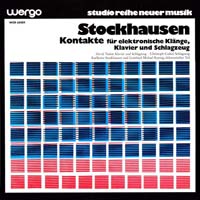 1960Kontakte