ALBUM NOTESOne week with Tierkreis: thoughts on Karlheinz Stockhausen
Tierkreis- Album Overview
Tierkreis, composed by the avant-garde German composer Karlheinz Stockhausen, was originally created in 1970 and has since become one of his most celebrated works. The album was released under the Deutsche Grammophon label in 1972, marking a significant point in contemporary classical music. The composition is notable for its unique structure, consisting of twelve pieces, each corresponding to a sign of the zodiac. This thematic choice reflects Stockhausen's interest in astrology and its influence on human experience.
Tierkreis was part of Stockhausen's broader exploration of sound and spatial relationships, utilizing a variety of instruments, including traditional orchestral elements alongside electronic sounds. The album features performances by a range of musicians, showcasing Stockhausen's ability to blend different musical styles and traditions. The pieces were originally composed for music boxes, and their adaptation for various ensembles has led to numerous interpretations over the years.
The cultural significance of Tierkreis lies in its embodiment of Stockhausen's innovative approach to music, challenging traditional forms and embracing new technologies. It has influenced countless composers and musicians, extending its reach beyond classical music into pop culture, where its themes of transformation and cyclical nature resonate deeply.
Review
In listening to Tierkreis over the span of a week, one cannot help but be drawn into the complex sonic landscapes that Stockhausen meticulously crafted. Each track unfolds like a chapter in a larger narrative, intertwining elements of chance, structure, and improvisation. The sounds are both familiar and alien, evoking a sense of wonder as well as discomfort.
Stockhausen's artistic vision is clear: he aims to transport listeners into a realm where music is not just an auditory experience but a profound exploration of existence itself. The melodies are simple yet profound, often juxtaposed against intricate harmonic backdrops that challenge the listener's expectations. Through his innovative use of rhythm and texture, Stockhausen crafts a journey that feels both personal and universal.
The absence of lyrics in traditional terms allows the listener to engage with the music on a deeper, more instinctual level. Instead of narrative, Stockhausen offers a meditation on the cyclical nature of life, reflected in the astrological themes of the album. This approach invites diverse interpretations, making each listening experience unique.
Highlights
- The innovative structure corresponding to the zodiac signs adds a fascinating layer of meaning.
- Exceptional instrumentation and arrangements that showcase Stockhausen's avant-garde style.
- The ability of the album to provoke thought and evoke emotion, transcending traditional boundaries of music.
Weak points
- Some listeners may find the abstract nature of the music challenging or inaccessible.
- The lack of traditional melodic development may deter fans of conventional classical music.
- Its experimental nature might not appeal to a broader audience, limiting its mainstream reach.
Overall evaluation
Tierkreis stands as a testament to Stockhausen's pioneering spirit and his ability to push the boundaries of music. While it may not cater to all tastes, it undoubtedly offers a rich and thought-provoking experience for those willing to engage with its complexities.
Personal rating: 8/10

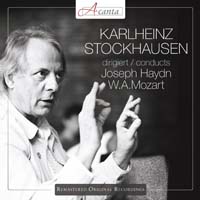
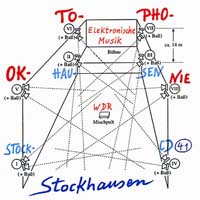 1994Oktophonie
 1980Donnerstag aus Licht
 1969Hymnen
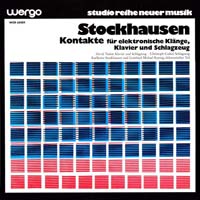 1960Kontakte