
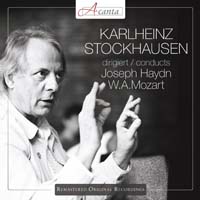
Unpacking Karlheinz Stockhausen's Klavierstücke I-xi
Klavierstücke I-xi- Album Overview
"Klavierstücke I-xi," a seminal collection by German composer Karlheinz Stockhausen, was released in 1952. This pivotal work is part of Stockhausen's exploration of serialism and avant-garde music, showcasing his innovative approach to composition and sound. The album features a series of 11 pieces for solo piano, each marked by unique structures and ideas that challenge traditional musical forms.
The work was produced under Stockhausen's own label, Stockhausen-Verlag, and highlights his collaboration with various pianists over the years, including renowned artists like Pierre-Laurent Aimard. The pieces were crafted during a period when Stockhausen was actively redefining the boundaries of music, heavily influenced by the post-World War II cultural landscape in Europe.
The Klavierstücke series is noted for its use of extended techniques, unconventional notation, and the exploration of silence and sound. Each piece invites the performer to interpret the score in a way that reflects both the structured and spontaneous elements of performance art. The significance of "Klavierstücke I-xi" lies not only in its technical demands but also in its role as a precursor to later developments in contemporary music and its influence on subsequent generations of composers.
This album remains a cornerstone in the study of avant-garde music and continues to be a critical reference point in discussions about the evolution of piano music in the 20th century. Stockhausen's work has inspired many and has led to a broader understanding of music's potential as an expressive medium.
Review
The soundscapes crafted in "Klavierstücke I-xi" are a testament to Stockhausen's vision of music as an exploration of new dimensions. Each piece varies dramatically in mood and texture, often oscillating between stark dissonance and moments of profound clarity. The album invites listeners into a world where the conventional rules of melody and harmony are stripped away, allowing for an intimate experience that can feel both challenging and enlightening.
Stockhausen's artistic vision is evident in his meticulous attention to detail and his willingness to push the boundaries of what piano music can achieve. The absence of lyrics allows the piano to be the sole voice, speaking a language of pure sound that conveys emotion without words. The expressive potential of the instrument is fully realized here, as the performer navigates complex rhythms and dynamic contrasts with both precision and interpretive freedom.
While the album may pose challenges to those unaccustomed to avant-garde music, it ultimately rewards listeners with a deep appreciation for the innovation and creativity that defines Stockhausen's work.
Highlights
- Innovative use of extended techniques and unconventional notation.
- Rich exploration of silence and sound, creating profound emotional landscapes.
- Groundbreaking influence on contemporary music and future composers.
Weak points
- May be challenging for listeners unfamiliar with avant-garde music.
- Lacks traditional melodic structure, which can alienate some audiences.
- Not all pieces achieve the same level of impact; some may feel less engaging.
Overall evaluation
"Klavierstücke I-xi" stands as a monumental achievement in Karlheinz Stockhausen's oeuvre, showcasing his pioneering spirit in the realm of avant-garde music. While it may not cater to everyone's taste, its artistic significance and technical brilliance render it an essential listen for those willing to embrace its complexities. Personal rating: 8/10
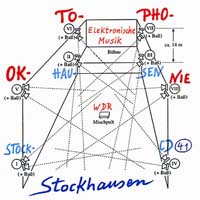 1994Oktophonie
 1980Donnerstag aus Licht
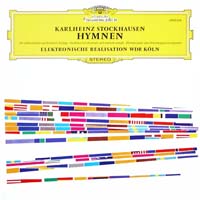 1969Hymnen
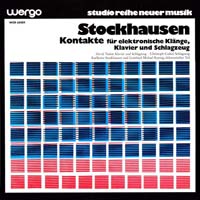 1960Kontakte