ALBUM NOTESA closer look at Karlheinz Stockhausen's album Percussion Masterpieces
Percussion Masterpieces- Album Overview
Karlheinz Stockhausen's "Percussion Masterpieces," released in 1970, is a seminal work that showcases the pioneering composer's innovative approach to rhythm and sound. This album, released under the Deutsche Grammophon label, is a collection of Stockhausen's compositions that emphasize percussion instruments, an area he believed could convey complex musical ideas and emotions. The album features pieces such as "Zyklus," which was originally composed in 1959, and "Mikrophonie I," created in 1964.
Stockhausen's work on "Percussion Masterpieces" involved collaboration with prominent percussionists, including the renowned ensemble of the Stockhausen Foundation for Music. The recording sessions took place in the late 1960s and early 1970s, a transformative period for Stockhausen as he explored the boundaries of performance, sound space, and the role of the audience.
Musically, the album is significant due to its experimental nature and its exploration of spatialization and live electronics, which were groundbreaking at the time. Stockhausen's compositions often reflect his interest in the relationship between sound and silence, as well as his philosophical inquiries into the nature of music itself. "Percussion Masterpieces" has influenced a wide range of genres, including contemporary classical and avant-garde music, and remains a touchstone for percussionists and composers alike.
Review
"Percussion Masterpieces" serves as a compelling showcase of Stockhausen's avant-garde vision, where traditional notions of rhythm and melody are challenged. The album navigates through a vast soundscape, oscillating between the cacophonous and the serene. Each track demands the listener's attention, drawing them into a world where percussion becomes a voice of its own. The use of unconventional instruments and innovative techniques creates an experience that is both immersive and thought-provoking.
Stockhausen’s artistry is evident in his ability to weave intricate textures that reflect his philosophical musings on the cosmos and the human experience. The works on this album do not rely on conventional musical structures; instead, they invite listeners to surrender to the unpredictability of sound. While some may find the absence of melody jarring, others will appreciate the raw exploration of timbre and rhythm.
Overall, "Percussion Masterpieces" encapsulates an era of musical exploration that resonates with listeners who appreciate the avant-garde.
Highlights
- Innovative use of percussion that challenges traditional music boundaries.
- Richly layered soundscapes that invite deep listening and reflection.
- Historical significance in the development of contemporary classical music.
Weak points
- May be inaccessible to listeners accustomed to conventional musical forms.
- Some tracks can feel overly long or meandering without a clear resolution.
- Lack of melodic content may deter those seeking traditional musical experiences.
Overall evaluation
"Percussion Masterpieces" stands as a testament to Stockhausen's genius and his contributions to the world of music. It is a challenging yet rewarding listen that pushes the boundaries of what music can be.
Personal rating: 8/10


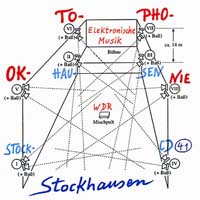 1994Oktophonie
 1980Donnerstag aus Licht
 1969Hymnen
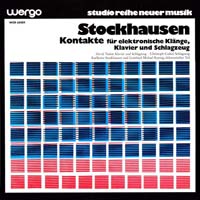 1960Kontakte