

From intro to finale: what Klavierstücke I-xiv delivers
Klavierstücke I-xiv- Album Overview
"Klavierstücke I-xiv," composed by the renowned German avant-garde composer Karlheinz Stockhausen, is a collection of 14 pieces, originally written between 1952 and 1962. The album was released in 1997 under the Deutsche Grammophon label, featuring the acclaimed pianist Maurizio Pollini, who is known for his exceptional interpretations of contemporary classical music. This collection showcases Stockhausen's innovative approach to composition, blending traditional piano techniques with experimental elements, a hallmark of his broader oeuvre.
The pieces in "Klavierstücke I-xiv" serve as a testament to Stockhausen's pioneering vision in 20th-century music, exploring concepts of sound, silence, and space. The work transcends mere performance, inviting listeners to engage with the complexities of modern music theory and the emotional depth behind each composition. Stockhausen's meticulous attention to detail and his exploration of serialism and spatialization are evident throughout the album, making it a significant contribution to both the classical and avant-garde genres.
This album was recorded in a live setting, capturing the raw intensity and spontaneity of Stockhausen's compositions. Each piece challenges traditional notions of melody and harmony, inviting performers and listeners alike to reconsider their relationship with sound. "Klavierstücke I-xiv" not only showcases Stockhausen’s technical prowess but also reflects the cultural upheaval of the post-war era, where artists sought new forms of expression to articulate the complexities of modern existence.
Review
The soundscape of "Klavierstücke I-xiv" is marked by its stark contrasts and intricate textures. Each composition unfolds like a sonic narrative, often oscillating between moments of chaos and tranquility. Pollini’s interpretation is nothing short of masterful; he navigates the demanding scores with precision and emotional depth, allowing the listener to experience Stockhausen’s vision fully. The absence of conventional structure invites an immersive listening experience, encouraging audiences to surrender to the unpredictability of sound.
While some may find the abstract nature of Stockhausen's music challenging, it is precisely this quality that enriches the album's artistic vision. The interplay of silence and sound creates a meditative space, compelling listeners to reflect on their perceptions of music. The pieces do not adhere to traditional forms, yet they resonate with profound emotional intensity, offering a rich tapestry of auditory experiences that transcend mere entertainment.
Highlights
- Innovative composition techniques that challenge traditional musical structures.
- Pollini's exceptional performance that brings Stockhausen's complex scores to life.
- The album's cultural significance as a reflection of post-war avant-garde movements.
Weak points
- The abstract nature of the music may alienate casual listeners.
- Some pieces may seem overly complex or inaccessible to those unfamiliar with modern classical music.
- The lack of thematic cohesion across the pieces could be disorienting for some audiences.
Overall evaluation
"Klavierstücke I-xiv" stands as a monumental achievement in contemporary classical music, embodying Stockhausen's groundbreaking vision and technical prowess. It is both challenging and rewarding, offering an immersive experience for those willing to delve into its depths.
Personal rating: 9/10 1994Oktophonie
 1980Donnerstag aus Licht
 1969Hymnen
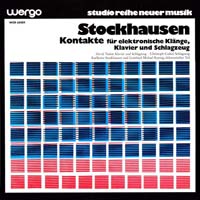 1960Kontakte