

Karlheinz Stockhausen returns with Kurzwellen
Kurzwellen- Album Overview
"Kurzwellen," released in 1980, is a significant work in the oeuvre of German composer Karlheinz Stockhausen. Known for his pioneering contributions to electronic music and avant-garde composition, Stockhausen created this album under his own label, Stockhausen-Verlag. The piece is an exploration of sound and communication, employing a variety of techniques and mediums, including live performance and tape manipulation. The title translates to "Short Waves," which reflects the use of radio sounds and broadcasting in the composition.
Stockhausen's innovative approach to music often involved collaboration with other artists and performers, and "Kurzwellen" is no exception. The work features contributions from vocalists and instrumentalists, blending traditional musical elements with electronic effects. One of the most notable aspects of this album is its incorporation of live radio signals, which were manipulated to create a unique auditory experience that challenges conventional listening. This method resonates with Stockhausen's interest in the relationship between sound and space, as well as his fascination with the nature of communication.
Upon its release, "Kurzwellen" was praised for its experimental nature and its ability to evoke emotional responses through sound. The album stands as a testament to Stockhausen's relentless pursuit of new musical languages and his desire to push the boundaries of what music can be. It remains a crucial part of the late 20th-century music landscape, influencing countless composers and sound artists who followed. The work has not only held significance within the realm of contemporary classical music but has also crossed over into the realms of electronic and experimental genres, further solidifying Stockhausen's legacy.
Review
In "Kurzwellen," Stockhausen continues his exploration of the abstract and the avant-garde, showcasing his unparalleled ability to manipulate sound. The album is a tapestry of intricate soundscapes, where disembodied voices intermingle with swirling electronic tones, creating a sense of unease and wonder. The lack of traditional structure challenges listeners to engage with the music on a deeper level, inviting them to interpret the sounds in a personal way. Stockhausen's vision is clear: he seeks to transcend the limitations of conventional music, drawing listeners into a world where sound becomes both a medium and a message.
The album's sonic palette is rich and varied, utilizing a wide array of timbres and textures. The juxtaposition of natural and synthetic sounds reflects Stockhausen's ongoing dialogue with technology and its role in shaping modern life. While the work may be daunting for some, it offers a rewarding experience for those willing to immerse themselves in its complexities. Overall, "Kurzwellen" is a bold statement of Stockhausen's artistic vision, reaffirming his status as a revolutionary figure in contemporary music.
Highlights
- Innovative use of live radio signals enhances the auditory experience.
- Complex soundscapes that challenge and engage listeners.
- Significant contribution to the evolution of electronic and avant-garde music.
Weak points
- May be inaccessible to casual listeners due to its abstract nature.
- Some tracks may feel overly experimental for traditional music enthusiasts.
- The album's length might test the patience of those unfamiliar with avant-garde formats.
Overall evaluation
"Kurzwellen" is a remarkable exploration of sound and communication, demonstrating Stockhausen's innovative spirit and artistic vision. While it may not appeal to everyone, its significance in the landscape of contemporary music is undeniable.
Personal rating: 8/10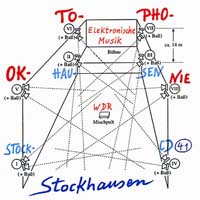 1994Oktophonie
 1980Donnerstag aus Licht
 1969Hymnen
 1960Kontakte