

How Karlheinz Stockhausen shaped the sound of Stockhausen 64 - Europa-gruss / Stop Und Start / T
Stockhausen 64 - Europa-gruss / Stop Und Start / T- Album Overview
"Stockhausen 64 - Europa-gruss / Stop Und Start / T," released in 1964, is a seminal work by the avant-garde composer Karlheinz Stockhausen, a pivotal figure in 20th-century music known for his innovative approach to sound and form. This album is part of Stockhausen's exploration of electronic music and spatialization, showcasing his ability to blend traditional composition techniques with groundbreaking technological advancements of the time. Released under the Deutsche Grammophon label, the album includes three distinct pieces: "Europa-gruss," "Stop Und Start," and "T," each serving as a testament to Stockhausen's vision of music as a multidimensional experience. The recording was produced during a period when Stockhausen was deeply engaged in the development of electronic music, experimenting with tape manipulation and live performance. Collaborators on the album included some of the leading musicians and technicians of the era, who helped bring Stockhausen's intricate soundscapes to life. The tracks are characterized by their complex structures and use of silence, creating a unique auditory experience that challenges conventional musical forms. Musically, the album reflects Stockhausen's interest in the relationship between sound and space, utilizing various techniques such as serialism and aleatory elements. Culturally, it represents a significant moment in the evolution of contemporary music, influencing a wide range of genres from electronic to experimental and beyond. The album remains a crucial reference point for understanding the trajectory of modern music, as it encapsulates Stockhausen's quest to redefine the role of the composer and the listener in the evolving landscape of sound.
Review
"Stockhausen 64 - Europa-gruss / Stop Und Start / T" is an audacious exploration of sound that defies easy categorization. The album’s soundscapes are both alien and enthralling, drawing listeners into a world where music transcends traditional boundaries. Each piece is meticulously crafted, with "Europa-gruss" standing out for its ethereal quality, combining field recordings with synthesized sounds that evoke a sense of journey and exploration. "Stop Und Start" employs abrupt shifts in dynamics and textures, creating a disorienting yet captivating listening experience that mirrors the frenetic pace of modern life. In contrast, "T" focuses on minimalism and silence, inviting contemplation and reflection. Stockhausen’s artistic vision is evident throughout the album, as he challenges listeners to reconsider their understanding of music and sound. His use of space and time in composition not only engages the auditory senses but also invites a deeper intellectual engagement with the material. While the album may be challenging for some, it is a rewarding experience that showcases Stockhausen’s genius and his unwavering commitment to innovation.
Highlights
- Innovative soundscapes that blend electronics with traditional composition.
- Complex structures that challenge conventional listening experiences.
- Cultural significance as a landmark in avant-garde and electronic music.
Weak points
- May be too avant-garde for mainstream audiences.
- Some listeners might find the lack of melodic content challenging.
- The experimental nature may deter those seeking traditional musical forms.
Overall evaluation
"Stockhausen 64 - Europa-gruss / Stop Und Start / T" is a landmark album that encapsulates the spirit of innovation in 1960s music. It challenges listeners to expand their horizons and engage with sound in new ways. While its avant-garde nature may not appeal to everyone, it is a crucial work for understanding the evolution of contemporary music.
Personal rating: 9/10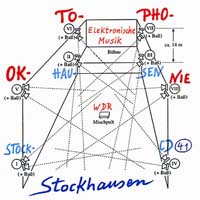 1994Oktophonie
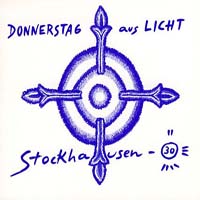 1980Donnerstag aus Licht
 1969Hymnen
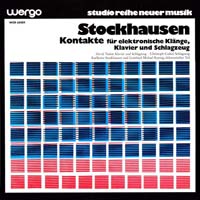 1960Kontakte