ALBUM NOTESReview of Karlheinz Stockhausen – Spiral / Pole / Japan / Zyklus / Tierkreis
Spiral / Pole / Japan / Zyklus / Tierkreis- Album Overview
Karlheinz Stockhausen's album "Spiral / Pole / Japan / Zyklus / Tierkreis" was first released in 1983 under the label Stockhausen-Verlag. This collection includes five distinct pieces: "Spiral" (1970), "Pole" (1971), "Japan" (1970), "Zyklus" (1959), and "Tierkreis" (1974). The album showcases Stockhausen's innovative approach to music, characterized by his use of spatialization, complex rhythms, and avant-garde structures.
"Zyklus," for instance, is one of the first compositions for a solo percussionist and highlights Stockhausen's fascination with the spatial organization of sound, as performers navigate through the score. "Tierkreis," which translates to "Zodiac," is a series of pieces based on the twelve zodiac signs, each with its own unique musical identity. The pieces were recorded at the Stockhausen studio in Kürten, Germany, where he collaborated with a variety of musicians, including percussionists, vocalists, and instrumentalists, to bring his avant-garde vision to life.
The album serves not only as a showcase of Stockhausen's pioneering work in electronic and contemporary music but also reflects the cultural climate of the 1980s, merging disciplines and breaking down barriers between different artistic forms. It remains a crucial part of Stockhausen's discography, demonstrating his relentless exploration of the boundaries of music and sound.
Review
"Spiral / Pole / Japan / Zyklus / Tierkreis" is an audacious amalgamation of sound that encapsulates the essence of Stockhausen's artistic vision. The album is a vivid exploration of textures and rhythms, where each piece unfolds like a separate universe. The sonic landscapes are rich and varied, ranging from the meditative qualities of "Tierkreis" to the rhythmic complexity of "Zyklus."
The recordings are meticulously crafted, allowing listeners to appreciate the intricate details of each performance. Stockhausen's use of silence and space is particularly striking; he invites the audience to engage actively with the music, creating a dialogue between sound and listener. While the abstract nature of the compositions may challenge traditional musical sensibilities, it rewards listeners with profound experiences that push the boundaries of perception.
Stockhausen's work is both cerebral and visceral, forging a connection that transcends language and cultural context. The album stands as a testament to his genius, revealing the rich tapestry of influences that shaped his work, from his interest in Eastern philosophy to the mathematical precision of his compositions.
Highlights
- Innovative use of spatialization and sound textures.
- Diverse compositions showcasing Stockhausen's versatility.
- Deep engagement with abstract concepts, inviting listener reflection.
Weak points
- Abstract nature may alienate some traditional music listeners.
- Complexity might require multiple listens to fully appreciate.
- Lack of conventional melodies may not appeal to all audiences.
Overall evaluation
"Spiral / Pole / Japan / Zyklus / Tierkreis" stands as a monument to Karlheinz Stockhausen's innovative spirit and his relentless pursuit of new musical horizons. While it may challenge conventional listening experiences, it rewards those willing to engage with its complexity.
Personal rating: 9/10


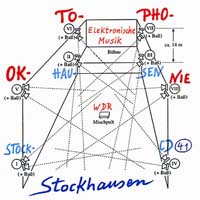 1994Oktophonie
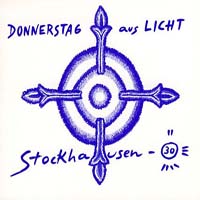 1980Donnerstag aus Licht
 1969Hymnen
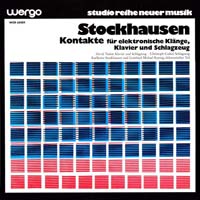 1960Kontakte