

Karlheinz Stockhausen-Sirius (1975-77) Elektronische Musik und Trompete, Sopran, – Sirius (1975-77) Elektronische Musik und Trompete,: a sonic journey
Album overview
"Sirius," composed by the avant-garde maestro Karlheinz Stockhausen between 1975 and 1977, is a groundbreaking work that seamlessly blends electronic music with acoustic elements, specifically the trumpet and soprano voice. Released in 1979 on the Deutsche Grammophon label, this composition is a significant piece within Stockhausen's oeuvre, showcasing his innovative approach to sound and spatial composition. "Sirius" is structured in multiple sections that explore the interplay between live performance and pre-recorded electronic sounds. The piece is notable for its intricate spatialization, with performers positioned in various locations to create a surround-sound experience, a technique that Stockhausen often employed to enhance the listener's immersion. The work features contributions from esteemed musicians including trumpet virtuoso Markus Stockhausen (the composer's son) and soprano Christine Schadeberg, both of whom bring a unique interpretative depth to the piece. Stockhausen's method of integrating the human voice and instrumental timbres with electronic sounds reflects the broader cultural movements of the 1970s, where boundaries between genres began to blur. Musically, "Sirius" is a reflection of Stockhausen's interest in cosmic themes and the exploration of time and space through sound, drawing inspiration from both science fiction and metaphysical concepts. This album is not just a listening experience, it is a sonic journey that invites audiences to contemplate the relationship between humanity and the cosmos.
Review
"Sirius" is an audacious and deeply immersive work that challenges conventional perceptions of music. The album's soundscapes vary from the ethereal and serene to the chaotic and dissonant, reflecting Stockhausen’s vision of a multi-dimensional auditory experience. The use of electronic manipulation alongside the purity of the trumpet and soprano creates a dialogue between the organic and the synthetic that is both haunting and mesmerizing. The vocal lines, delivered with precision by Schadeberg, often intertwine with the trumpet's melodic and harmonic explorations, producing a rich tapestry of sound. The electronic components serve not merely as background but as integral parts of the composition, enhancing the overall atmosphere. The spatial arrangements add to the complexity, creating a sense of movement that draws the listener into a vast sonic landscape. However, this work may feel challenging to those unfamiliar with Stockhausen's avant-garde style, as it often eschews traditional song structures in favor of an exploratory approach. Nonetheless, for those willing to engage with its complexities, "Sirius" offers a profound auditory experience that resonates on multiple levels.
Highlights
- Innovative blend of electronic and acoustic music.
- Intricate spatialization enhances the listening experience.
- Powerful performances from both the trumpet and soprano.
Weak points
- May be inaccessible to listeners unfamiliar with avant-garde music.
- Complex structures can lead to a lack of immediate emotional connection.
- Lengthy sections might test the patience of some audiences.
Overall evaluation
"Sirius" stands as a testament to Karlheinz Stockhausen's visionary approach to music, merging electronic innovation with traditional forms. While it may challenge some listeners, its depth and complexity make it a rewarding experience for those ready to delve into its sonic world. Personal rating: 8/10
```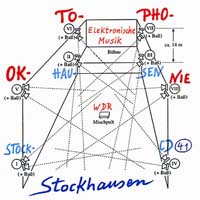 1994Oktophonie
 1980Donnerstag aus Licht
 1969Hymnen
 1960Kontakte