ALBUM NOTESUnpacking Karlheinz Stockhausen-Mantra (pianos: Yvar Mikhashoff, Rosalind Bevan, Electroni's Mantra (pianos: Yvar Mikhashoff, Rosalind Bevan, E
Album overview
Karlheinz Stockhausen's "Mantra," composed in 1970, exemplifies the avant-garde movement, blending traditional and electronic music. This piece is notable for its unique structure, featuring two pianos played by Yvar Mikhashoff and Rosalind Bevan, alongside a tape of electronically generated sounds. The album was released in 1971 under the Deutsche Grammophon label, capturing the essence of Stockhausen's innovative approach to sound and composition. The collaboration between Mikhashoff and Bevan showcases their remarkable ability to navigate Stockhausen's complex rhythmic patterns and harmonic progressions, which are deeply rooted in his exploration of time and perception in music. The recording combines acoustic and electronic elements, reflecting Stockhausen's interest in spatialization and the listener's experience. The album is significant not only for its technical achievements but also for its influence on subsequent generations of composers and musicians, reinforcing Stockhausen's position as a pioneer in the realm of contemporary classical music. "Mantra" has been recognized for its intricate interplay of sounds and its philosophical underpinnings, making it a vital contribution to the canon of 20th-century music.
Review
"Mantra" invites listeners into a world where sound is both a physical and metaphysical experience. The interplay between the two pianos creates a rich tapestry of textures, where each note resonates with purpose and intensity. The electronic components add an otherworldly dimension, transforming the pianos' familiar tones into something entirely new and captivating. Stockhausen's artistic vision shines through the meticulous layering and manipulation of sound, which challenges the listener's expectations. Unlike traditional classical compositions, "Mantra" does not rely on melody in a conventional sense, instead, it emphasizes rhythm and timbre, engaging the audience in a profound dialogue with the music. The experience can be both meditative and exhilarating, as the intricate patterns unfold and evolve over time, inviting listeners to lose themselves in the immersive soundscape.
Highlights
- Innovative fusion of acoustic and electronic elements.
- Exceptional performance by pianists Yvar Mikhashoff and Rosalind Bevan.
- Richly layered textures that challenge conventional listening experiences.
Weak points
- May be challenging for listeners unfamiliar with avant-garde music.
- Lengthy pieces can test the patience of some audiences.
- Complexity may overshadow emotional accessibility.
Overall evaluation
"Mantra" stands as a testament to Stockhausen's innovative genius and remains a landmark in contemporary music. Its unique blend of sounds and ideas pushes the boundaries of traditional composition, offering an experience that is both cerebral and sensory.
Personal rating: 9/10
```


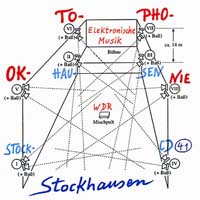 1994Oktophonie
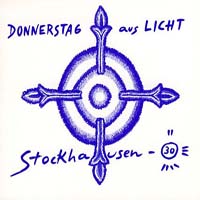 1980Donnerstag aus Licht
 1969Hymnen
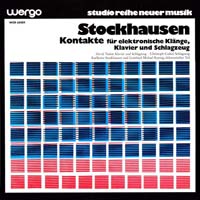 1960Kontakte