ALBUM NOTESA closer look at Karlheinz Stockhausen-Mantra (pianos: Yvar Mikhashoff, Rosalind Bevan, electroni's album Mantra (pianos: Yvar Mikhashoff, Rosalind Bevan, e
Album overview
Karlheinz Stockhausen's "Mantra," released in 1970, is a seminal work in the realm of contemporary classical music, specifically within the genre of electronic music. This piece features two pianos played by Yvar Mikhashoff and Rosalind Bevan, accompanied by electronic sounds, which Stockhausen composed to explore the relationship between instrumental and electronic music. The album was released under the Deutsche Grammophon label and produced by the renowned avant-garde composer himself.
"Mantra" is notable for its intricate structure and the use of a unique mathematical process that Stockhausen referred to as a "mantra." The piece is based on a simple melodic motif that undergoes various transformations throughout the performance, showcasing Stockhausen's innovative approach to composition. The recording was made at the WDR Studio in Cologne, a hub for experimental music and a key location for Stockhausen's work. The collaboration with Mikhashoff and Bevan adds a personal touch, as both pianists were deeply familiar with Stockhausen's style and intentions.
The cultural significance of "Mantra" lies in its challenge to traditional notions of music and its exploration of the boundaries between live performance and electronic manipulation. While the album did not produce chart-topping singles, it has been influential in both the realms of classical music and electronic soundscapes, inspiring countless musicians and composers in the decades that followed.
Review
"Mantra" is a mesmerizing exploration of sound that pushes the boundaries of both instrumental and electronic music. The interplay between the two pianos creates a rich tapestry of harmonies and rhythms that are both intricate and captivating. Stockhausen's meticulous compositional techniques are evident, as he bends the listeners' perception of time and space through his innovative use of repetition and variation.
The album's sound design stands out for its clarity and depth. The electronic components are not merely additive, they serve to enhance the pianos' dialogue, creating an immersive auditory experience. The dialogue between Mikhashoff and Bevan is exceptional, showcasing their technical prowess and deep understanding of Stockhausen's vision. The piece's mantra-like quality invites listeners to enter a trance-like state, making it a profound experience for those willing to engage with its complexities.
However, the avant-garde nature of "Mantra" may not appeal to all listeners, as its abstract qualities can be challenging. Yet, for those who appreciate the nuances of contemporary classical and electronic music, it represents a high point in Stockhausen's oeuvre.
Highlights
- Innovative use of electronic elements alongside traditional instrumentation.
- Exceptional performances by Yvar Mikhashoff and Rosalind Bevan.
- Rich, immersive soundscape that encourages deep listening.
Weak points
- Abstract nature may alienate mainstream listeners.
- Lengthy duration could be daunting for casual audiences.
- Complexity may require multiple listens to fully appreciate.
Overall evaluation
"Mantra" stands as a landmark in the intersection of classical and electronic music, showcasing Stockhausen's genius and innovative spirit. It challenges the listener while providing a deeply rewarding experience for those willing to delve into its depths.
Personal rating: 9/10
```


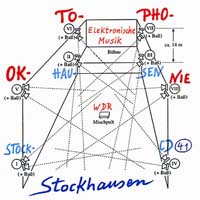 1994Oktophonie
 1980Donnerstag aus Licht
 1969Hymnen
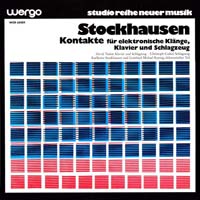 1960Kontakte