
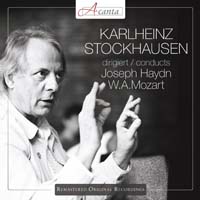
Is Mantra (andreas grau, Gotz Schumacher) Karlheinz Stockhausen's best work yet?
Mantra (andreas Grau, Gotz Schumacher)- Album Overview
Released in 1970, "Mantra" is a seminal work by the avant-garde composer Karlheinz Stockhausen, featuring the virtuoso performances of pianists Andreas Grau and Götz Schumacher. The album was released under the Deutsche Grammophon label and has since become a cornerstone of contemporary classical music. "Mantra" is notable for its unique blend of acoustic sounds and electronic manipulation, showcasing Stockhausen's pioneering approach to music composition and performance.
The piece is structured around a complex rhythmic and melodic mantra that is developed and transformed throughout its duration, which lasts approximately 45 minutes. The recording captures the intricate interplay between the two pianos, augmented by electronic sounds that were created using tape manipulation and live electronics, a technique that Stockhausen was instrumental in developing during this period.
Collaborators on this project included the composer himself, who was deeply involved in the production process, ensuring that the recording was a faithful representation of his vision. The album has not only been significant in the realm of classical music but has also influenced a variety of genres, including minimalism and electronic music. Its exploration of sound textures and rhythmic complexity has garnered a dedicated following among musicians and composers who seek to push the boundaries of traditional music.
As a testament to its cultural impact, "Mantra" has been performed in various prestigious venues and festivals worldwide, highlighting Stockhausen's enduring legacy as one of the 20th century's most innovative composers.
Review
"Mantra" is a compelling exploration of sound, where Stockhausen's avant-garde sensibilities shine through the intricate dialogue between the two pianos. The interplay of the acoustic piano with electronic elements creates a rich sonic landscape that is both immersive and challenging. Grau and Schumacher deliver performances that are technically proficient and emotionally resonant, capturing the essence of Stockhausen's vision.
The composition's repetitive motifs and evolving structures engage the listener, inviting them into a meditative state that is characteristic of much of Stockhausen's work. However, the abstract nature of the music may pose a challenge for casual listeners, as the lack of traditional melodies and harmonies requires a deeper engagement with the sound itself. Nevertheless, the artistic vision behind "Mantra" is clear; it is a testament to the potential of music as a medium to explore complex ideas and emotions.
Highlights
- Innovative blend of acoustic and electronic sounds.
- Exceptional performances by Andreas Grau and Götz Schumacher.
- A profound exploration of rhythm and texture that challenges traditional music forms.
Weak points
- Abstract nature may alienate casual listeners.
- Length of the piece might test the patience of some audiences.
- Lack of conventional melodies may limit wider accessibility.
Overall evaluation
Overall, "Mantra" stands as one of Karlheinz Stockhausen's most ambitious works, pushing the boundaries of contemporary classical music while offering a unique listening experience. Although it may not cater to everyone’s tastes, its innovative approach and artistic integrity make it a significant milestone in Stockhausen's oeuvre.
Personal rating: 8/10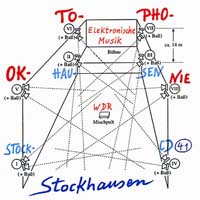 1994Oktophonie
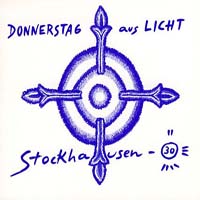 1980Donnerstag aus Licht
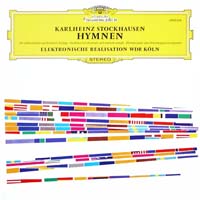 1969Hymnen
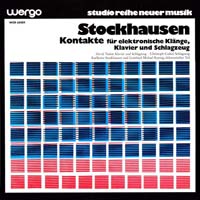 1960Kontakte