
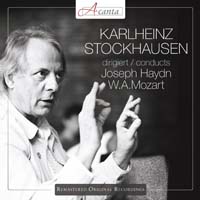
Inside the atmosphere of Karlheinz Stockhausen's Kontra-punkte / Zeitmasze / Stop / Adieu
Kontra-punkte / Zeitmasze / Stop / Adieu- Album Overview
"Kontra-punkte / Zeitmasze / Stop / Adieu" is an essential collection of works by the influential German composer Karlheinz Stockhausen, released in 1970 under the Deutsche Grammophon label. This compilation features four significant pieces: "Kontra-punkte," "Zeitmasze," "Stop," and "Adieu," showcasing Stockhausen's pioneering approach to contemporary classical music and his innovative use of spatialization and sound structure.
"Kontra-punkte," composed in 1952, is a landmark piece that highlights the interplay between various instrumental voices, creating a rich tapestry of sound that challenges traditional musical forms. "Zeitmasze," composed in 1955, takes a different approach, focusing on rhythm and time, utilizing a variety of instruments to explore the concept of time manipulation in music. "Stop," from 1962, is a fascinating work that utilizes silence and pauses as integral components, reflecting Stockhausen's interest in the performative aspect of music. Lastly, "Adieu," composed in 1972, serves as a poignant farewell, encapsulating Stockhausen's reflections on life and mortality through music.
This album features performances by notable musicians, including the ensemble of the West German Radio, which was instrumental in bringing Stockhausen's complex works to life. The meticulous production techniques employed by Deutsche Grammophon enhance the listening experience, allowing the intricate details of Stockhausen's compositions to shine through. The cultural significance of this album cannot be overstated, as it not only represents a crucial period in Stockhausen's career but also encapsulates the spirit of innovation and experimentation that defined the avant-garde movement of the 20th century.
Review
The collection "Kontra-punkte / Zeitmasze / Stop / Adieu" is a testament to Stockhausen's artistic vision, pushing the boundaries of what music can be. The soundscapes created in these pieces are both challenging and rewarding, often requiring active engagement from the listener. Stockhausen's unique method of composition intertwines complex rhythms and unexpected tonalities, leading to moments of both chaos and clarity. Each track offers a distinct experience, highlighting Stockhausen's ability to evoke deep emotional responses through abstract means.
While the lack of traditional melodies may be off-putting to some, it is precisely this departure from convention that makes the album significant. Stockhausen’s exploration of sound as a physical experience transforms the act of listening into an immersive event. The lack of lyrics allows for a broader interpretation of the music, inviting listeners to project their own meanings and feelings onto the sounds. This, combined with the spatial dynamics of the performances, creates a profound atmosphere that resonates long after the music has ceased.
Highlights
- Innovative use of silence and sound dynamics in "Stop."
- The intricate layering of voices in "Kontra-punkte."
- The rhythmic complexity and exploration of time in "Zeitmasze."
Weak points
- The abstract nature may alienate traditional classical music fans.
- Requires a focused and attentive listening experience to fully appreciate.
- Some may find the lack of conventional structure challenging.
Overall evaluation
"Kontra-punkte / Zeitmasze / Stop / Adieu" stands as a pivotal work in the canon of contemporary classical music, reflecting Karlheinz Stockhausen's groundbreaking approach to composition. While it may not cater to all tastes, its artistic merits and innovative spirit are undeniable.
Personal rating: 8.5/10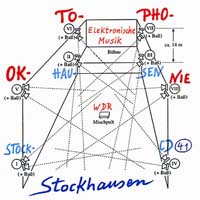 1994Oktophonie
 1980Donnerstag aus Licht
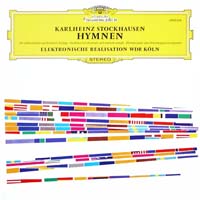 1969Hymnen
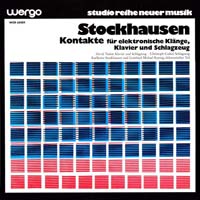 1960Kontakte