ALBUM NOTESUnpacking Karlheinz Stockhausen-Klavierstücke I-XI / Mikrophonie I 's Klavierstücke I-XI / Mikrophonie I
Album overview
The album "Klavierstücke I-XI / Mikrophonie I" by Karlheinz Stockhausen, released in 1970, represents a pivotal moment in contemporary classical music. This collection features Stockhausen's groundbreaking works for piano, specifically the eleven pieces that make up "Klavierstücke I-XI," alongside "Mikrophonie I," a piece for percussion and live electronics. The recordings were made under the Deutsche Grammophon label, showcasing the innovative artistic approach of Stockhausen, who was a leading figure in the post-war avant-garde movement.
The "Klavierstücke" series was composed between 1952 and 1961, exploring the possibilities of the piano through unconventional techniques and structures, often challenging the listener's perception of sound. "Mikrophonie I," composed in 1964, utilizes microphones and live processing to create an immersive auditory experience, blurring the lines between performance and composition. The album features prominent musicians, including pianist Jürg Wyttenbach and percussionist Paul Lovens, who contributed to the realization of Stockhausen's complex vision. This release not only highlights Stockhausen's innovative compositional techniques but also reflects the cultural shifts of the 20th century, where traditional boundaries of music were increasingly questioned and redefined.
Review
Stockhausen's "Klavierstücke I-XI / Mikrophonie I" is a bold exploration of sound that embodies the avant-garde spirit of its time. The piano pieces, while rooted in traditional form, break away into a realm of abstract expressionism, inviting listeners to engage with each note and silence as an integral part of the overall experience. The intricate textures and complex rhythms challenge conventional listening habits, pushing the boundaries of what piano music can achieve.
"Mikrophonie I" offers a stark contrast to the piano works, showcasing Stockhausen's fascination with the interaction between acoustic sound and electronic manipulation. The use of microphones to amplify and transform percussive sounds creates a rich tapestry of auditory experiences that feels both organic and otherworldly. Collectively, these pieces reflect Stockhausen's visionary approach, merging musical experimentation with philosophical inquiry.
While the album may not cater to mainstream tastes, its artistic vision and innovative use of sound make it essential listening for those interested in the evolution of contemporary music.
Highlights
- Innovative use of traditional and electronic instruments.
- Groundbreaking compositions that challenge conventional musical forms.
- Rich auditory textures that invite deep listening and reflection.
Weak points
- May be inaccessible to casual listeners unfamiliar with avant-garde music.
- Lengthy compositions could test the patience of those seeking more conventional structures.
- The abstract nature of the work might overshadow its emotional impact for some listeners.
Overall evaluation
"Klavierstücke I-XI / Mikrophonie I" is a monumental work that encapsulates Karlheinz Stockhausen's pioneering spirit and his quest to redefine music. It stands as a testament to the power of sound, encouraging listeners to embrace the complexities of contemporary composition.
Personal rating: 8/10
```


 1994Oktophonie
 1980Donnerstag aus Licht
 1969Hymnen
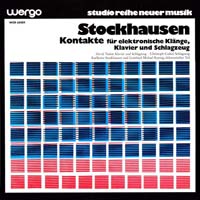 1960Kontakte