ALBUM NOTESA closer look at Karlheinz Stockhausen-Klavierstücke (feat. David Tudor)'s album Klavierstücke (feat. David Tudor)
Album overview
Karlheinz Stockhausen's "Klavierstücke" is a seminal work in the realm of contemporary classical music, showcasing the innovative spirit of the 20th century. Released in 1952, this collection of piano pieces is performed by the renowned avant-garde pianist David Tudor, who was a close collaborator of Stockhausen. The album is part of Stockhausen's exploration of spatialization and sound formation, emphasizing the relationship between silence, sound, and the physicality of performance. The work is comprised of various pieces, each demonstrating unique compositional techniques, from graphic notation to intricate rhythmic structures.
The recording took place in the early 1960s and was released under the Deutsche Grammophon label, known for its commitment to high-quality recordings of classical and contemporary music. Stockhausen’s influence is significant within both the classical and avant-garde music communities, marking a shift towards more experimental forms of expression. His works frequently challenged traditional notions of music and sound, and "Klavierstücke" is no exception, representing a critical moment in the evolution of modern piano literature. The album not only showcases Tudor’s exceptional interpretative skills but also serves as a landmark for the exploration of new musical languages.
Review
"Klavierstücke" is a captivating exploration of sound that transcends conventional boundaries. David Tudor's performance is nothing short of extraordinary, his delicate touch and bold dynamics bring Stockhausen's intricate compositions to life. The soundscapes created are often dissonant yet hauntingly beautiful, inviting listeners into a world where silence and sound coexist. Each piece unfolds in a unique manner, with Tudor navigating the complex textures and rhythms with both precision and an intuitive sense of musicality.
Stockhausen’s compositional style in "Klavierstücke" reflects his deep interest in the relationship between music and space. The pieces often require the performer to engage with the physicality of the piano in innovative ways, resulting in a performance that is as much about the act of playing as it is about the music itself. The album challenges listeners to rethink their understanding of music, moving beyond melody and harmony into realms of abstract sound. It stands as a testament to the power of experimental music and its ability to evoke emotion and intellectual engagement.
Highlights
- Exceptional performance by David Tudor, showcasing technical skill and emotional depth.
- Groundbreaking compositions that challenge traditional music forms.
- Rich historical context, marking a significant moment in contemporary classical music.
Weak points
- The abstract nature of the music may not appeal to all listeners.
- Some pieces can feel disjointed or difficult to grasp for those unfamiliar with avant-garde music.
- Limited commercial accessibility compared to more mainstream classical recordings.
Overall evaluation
"Klavierstücke" is a landmark album that showcases the innovative spirit of Karlheinz Stockhausen and the exceptional artistry of David Tudor. It remains a vital work for anyone interested in the evolution of modern music.
Personal rating: 9/10
```

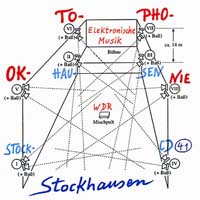 1994Oktophonie
 1980Donnerstag aus Licht
 1969Hymnen
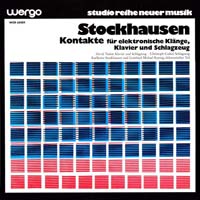 1960Kontakte